TPO Roofing · Jeffersontown, KY
Jeffersontown TPO Roofing Contractor
Protect Your Building With Welded Seams That Hold Against Wind and Rain
As a Jeffersontown TPO roofing contractor, we install white, heat-welded TPO roofs on warehouses, offices, and retail buildings, attached to suit the deck and wind.
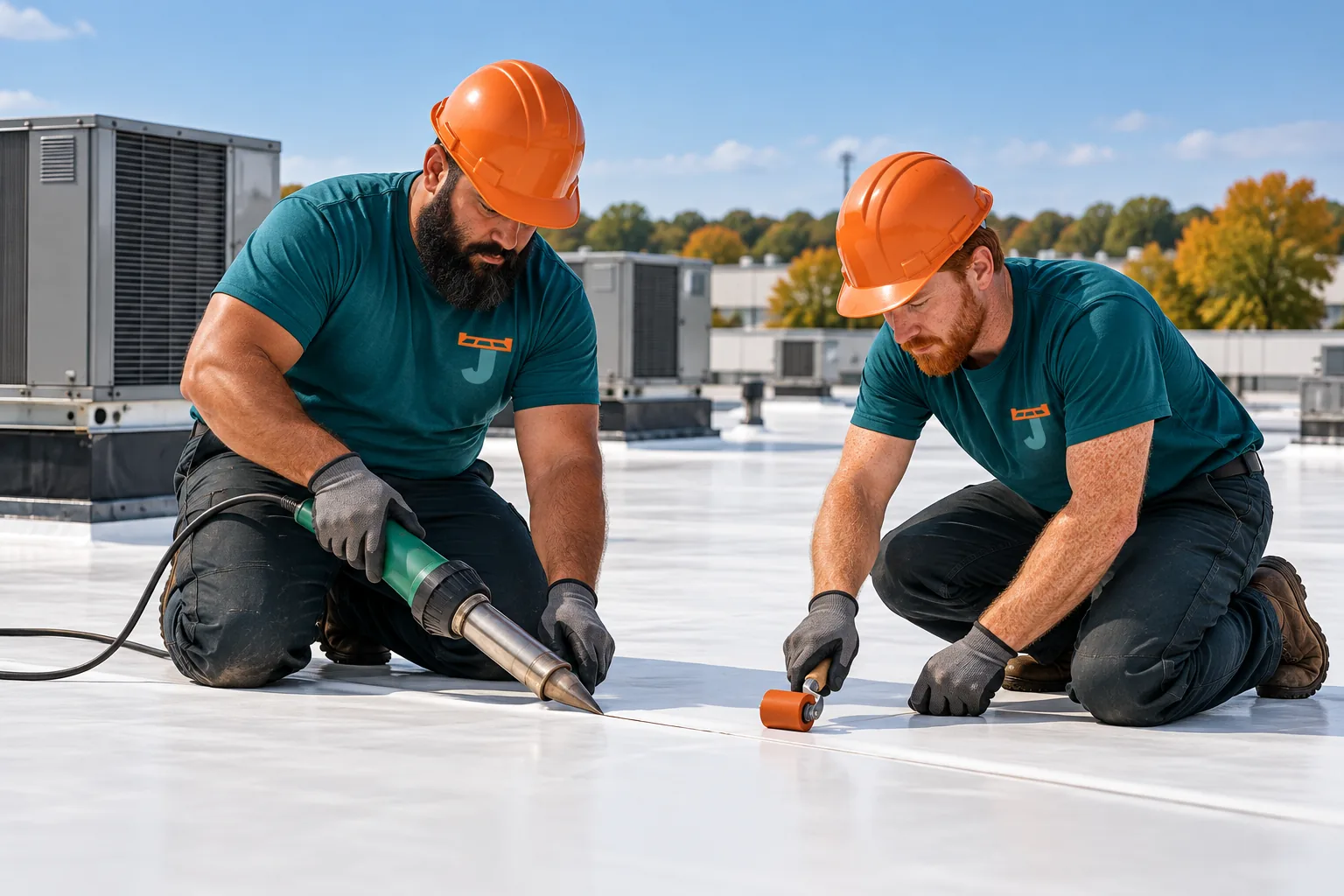
- Hot-air welded seams
- Every seam probed after cooling
- 45, 60, or 80 mil sheet
- Walkway pads to each unit
Best TPO Roofing Fit for Jeffersontown Buildings
Before quoting, a Jeffersontown TPO roofing contractor should confirm a welded single-ply sheet suits the roof. This is how TPO and EPDM line up on the deciding details.
TPO
- Material
- Thermoplastic polyolefin
- Seams
- Hot-air welded
- Color
- White on most buildings
- Grease exposure
- Fair
- Sheet width
- Moderate
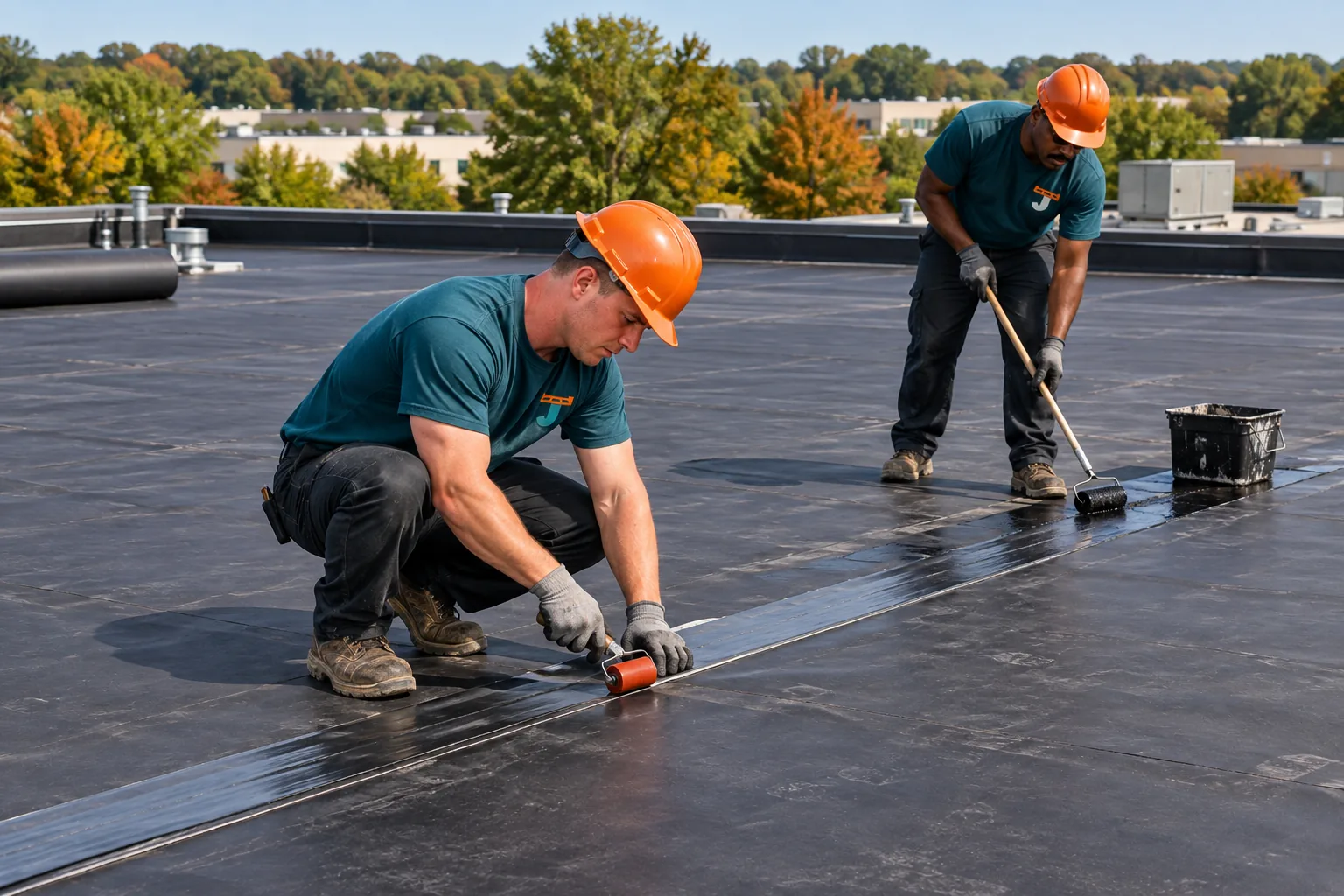
EPDM
- Material
- Synthetic rubber
- Seams
- Seam tape and primer
- Color
- Black, with white offered
- Grease exposure
- Weak
- Sheet width
- Wide, fewer seams
When an Old Roof Is Ready for TPO
These conditions on an existing low-slope roof usually lead to a TPO replacement or recover.
Seams Failing Across the Field
Laps opening in many places, on an old TPO, EPDM, or built-up roof, mean patching will chase leaks indefinitely. A new welded sheet ends that.
Black Roof Over Cooled Space
Offices and retail under a black or gravel roof carry more summer heat into the space below. White TPO keeps the membrane and the deck under it cooler.
Fluttering Sheet in Wind
A loose, mechanically attached sheet that billows in storms stresses its fastener rows. A new layout, or a fully adhered sheet, settles it.
Crowded Curbs and Units
Roofs with many rooftop units, pipes, and curbs suit welded TPO, because every curb wrap and boot welds to the field sheet as one piece.
Ponding Near Drains
Water that sits for days needs tapered insulation and crickets under the new TPO, planned from the drain locations back.
Two Old Roofs Already
A roof that already carries a recover layer needs a full tear-off before TPO goes down, since the code limits another recover.
TPO Roofing Options for Jeffersontown
Attachment and thickness are chosen for the deck, the wind exposure, and the foot traffic each roof sees.
Mechanically Attached
Plates and screws in the seam laps hold the sheet. It installs fast and suits most steel-deck warehouses, though the sheet can flutter in high wind.
Fully Adhered
Bonding adhesive across the whole sheet keeps it quiet in wind and gives a smooth finish. It needs dry weather for the adhesive to set.
Induction Welded
The sheet welds to plates from above with a special tool, so fewer fasteners sit in the seams. It fits roofs with high wind exposure.
60 or 80 Mil Sheet
Thicker TPO resists punctures from dropped tools and foot traffic around rooftop units, which matters on roofs serviced often.
Benefits of a New TPO Roof
What a new TPO roof changes at the seams, curbs, and surface of a commercial building.
Fused Seams
Each heat-welded lap fuses into one piece, making the seam the strongest part of a properly installed sheet.
Cooler Surface
A white sheet reflects far more sunlight than a dark roof, keeping the membrane and space below cooler.
One-Piece Details
Curb wraps, boots, and wall flashings are TPO welded to the field, without separate sealant joints.
Defined Service Paths
Walkway pads route technicians to each unit and keep traffic off the welded laps.
Seams Lifting After a Windy Week?
Fluttering sheets and open laps on an older single-ply roof are worth a look before the next storm. Ask for an inspection of the field and perimeter.
How We Install a TPO Roof
The order of work on a TPO replacement, from the first core cut to the last walkway pad.
Inspect Your Roof
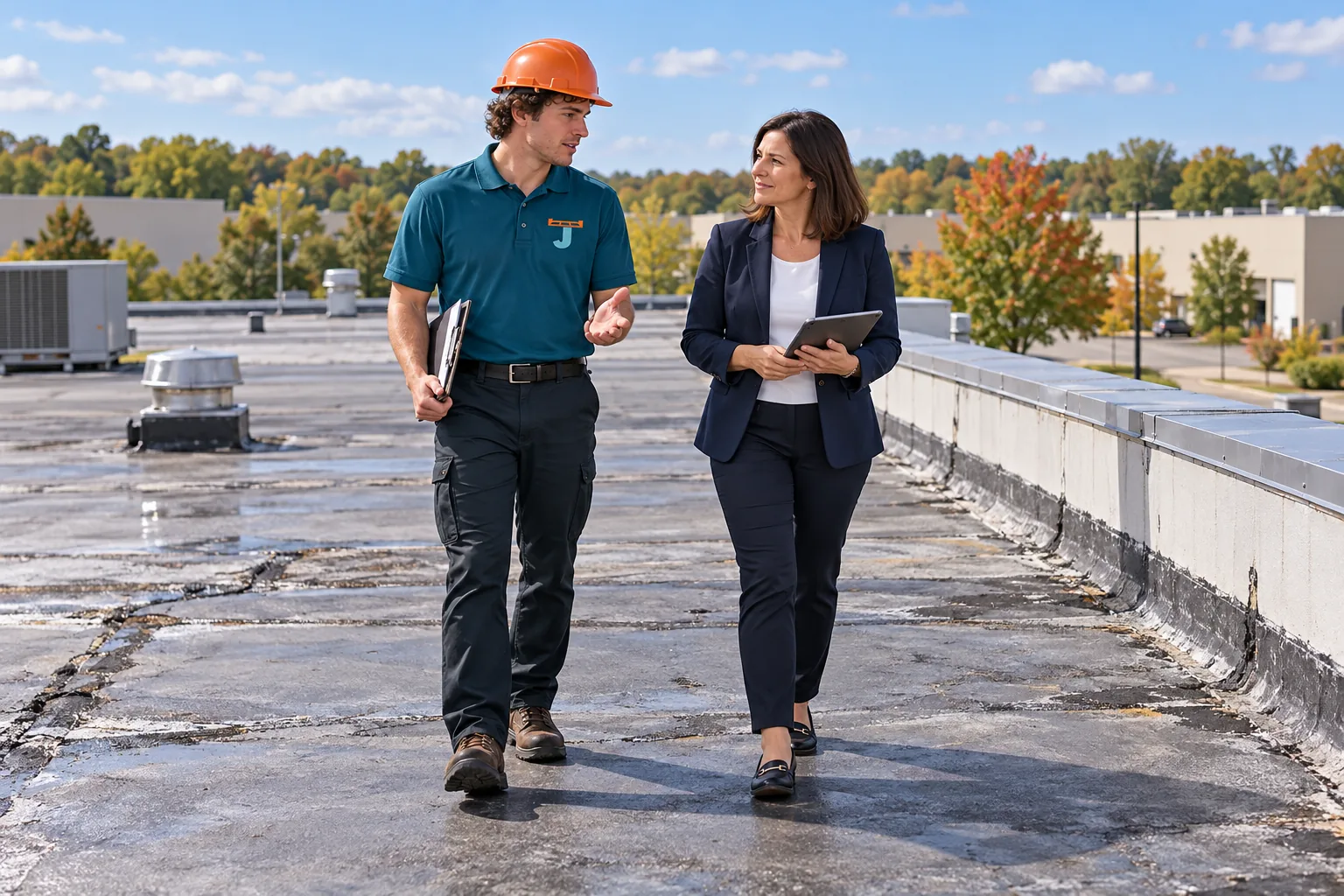
We check the deck type, count the existing layers with core cuts, and map every drain, curb, and pipe. That sets the attachment method and whether TPO goes over a recover board or a bare deck.
Prepare the Deck
Old layers come off where needed, the steel, wood, or concrete deck gets checked, and insulation and cover board go down with the fastener pattern the manufacturer's wind design sets.
Lay and Weld the Sheet
TPO rolls out across the field and every lap is welded with a hot-air welder. After cooling, crews probe each seam with a blunt tool, looking for gaps or cold welds.
Flash Curbs and Drains
Curbs get wrapped to their upper edge, drains get new clamping rings, pipes get prefabricated boots, and corners get molded patches, all welded to the field sheet.
Edge Metal and Walkways
Termination bar and counterflashing finish the walls, edge metal closes the perimeter, and walkway pads lead to each rooftop unit before the roof file is closed.
Other Roof Systems We Install
TPO fits most low-slope roofs here. These systems fit the roofs it does not.
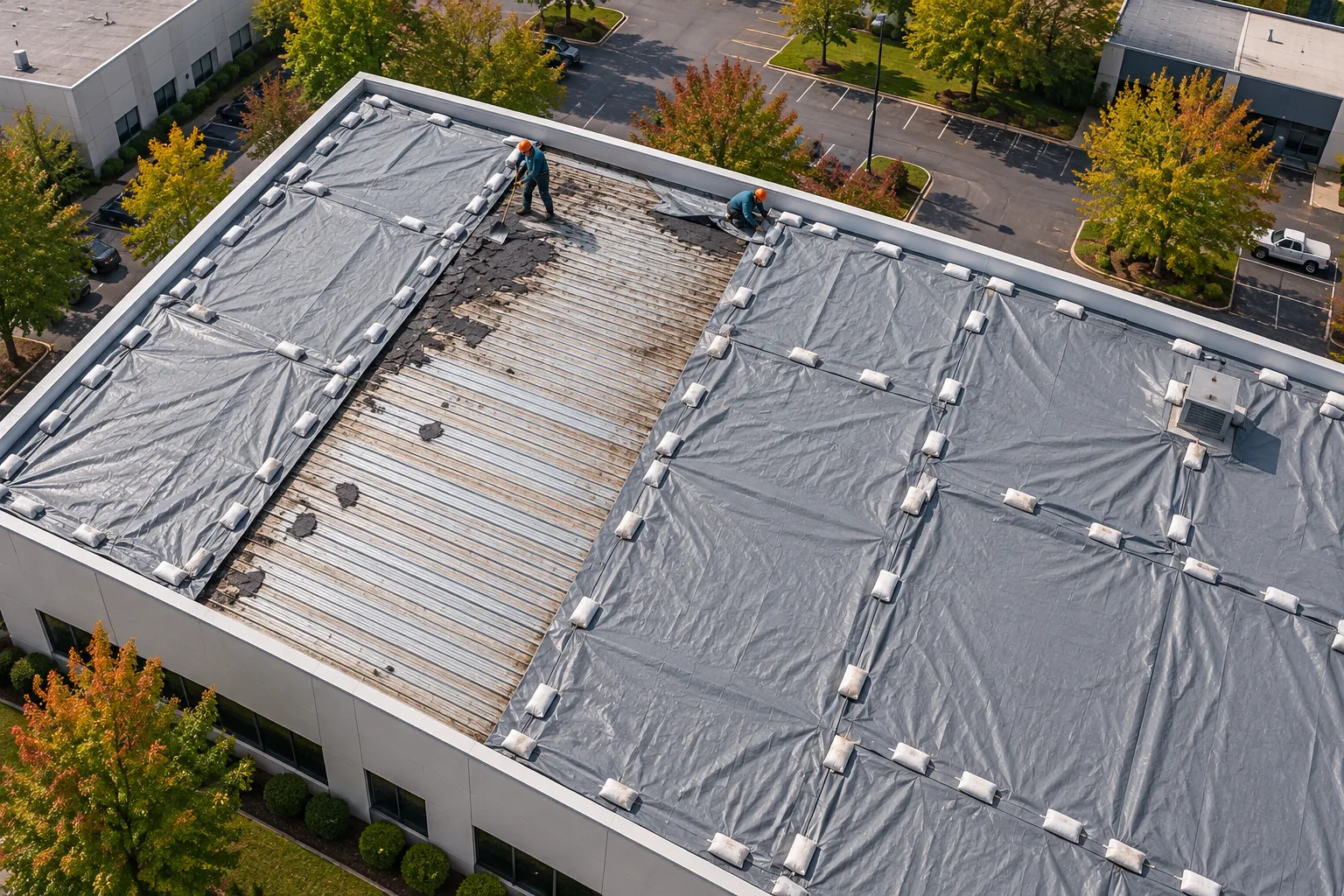
Flat Roofing
Full low-slope rebuilds, including tapered insulation for ponding and old built-up roofs.
Flat roofing in Jeffersontown →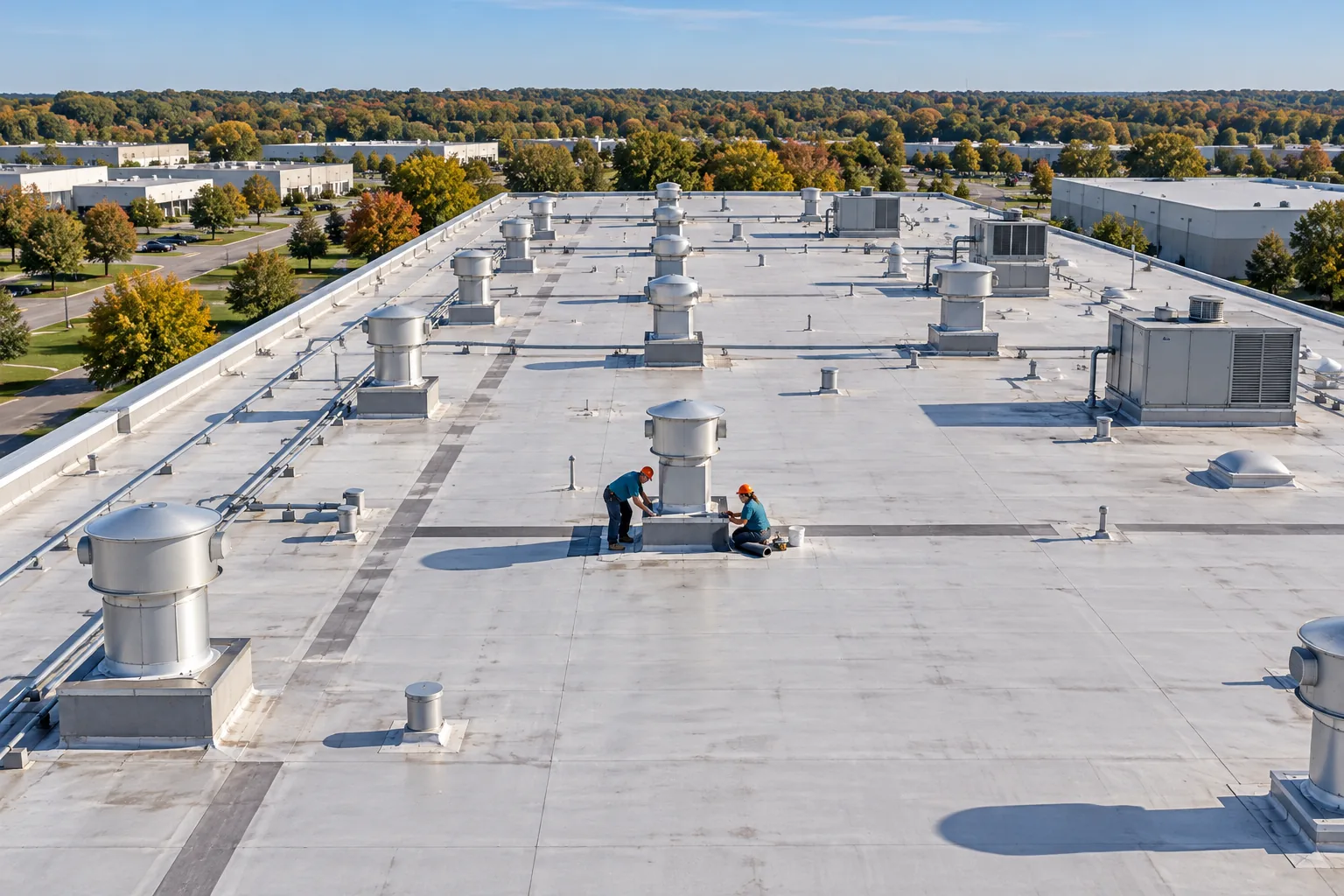
Industrial Roofing
Plant roofs where grease and process exhaust can call for a grease-rated sheet.
Industrial roofing in Jeffersontown →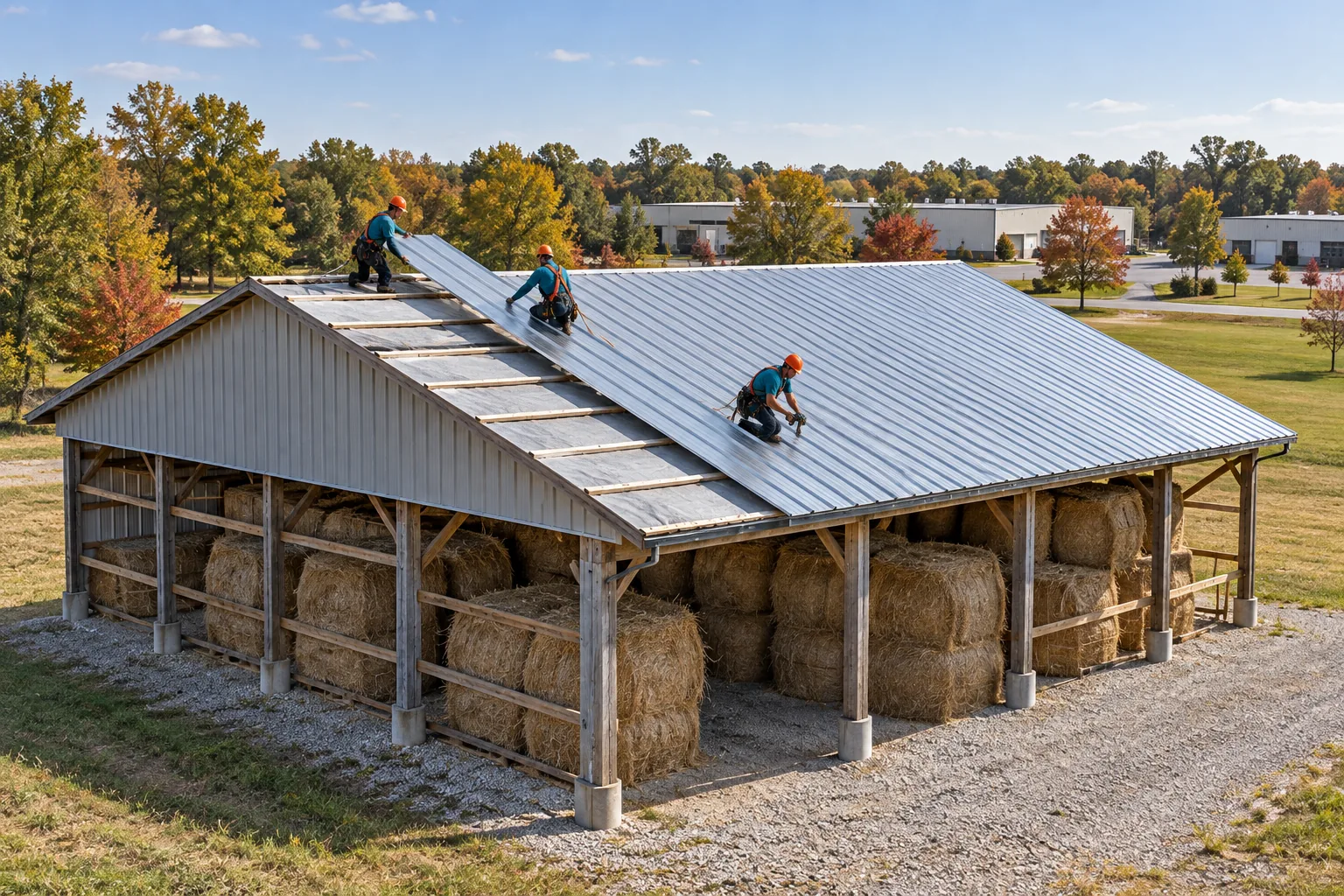
Metal Roofing
Steel panels for pitched roofs, or retrofit framing over a flat roof.
Metal roofing in Jeffersontown →TPO Questions for a Jeffersontown TPO Roofing Contractor
Answers on seams, attachment, details, and heat for a TPO roof in Jefferson County.
Most Asked
What is a TPO roof, and how are its seams joined?
TPO is a single-ply thermoplastic polyolefin membrane, white on most commercial buildings. Its seams are heat-welded with a hot-air welder so the two sheets fuse at each lap, then probed after cooling. For TPO roof seam welding in Jeffersontown, KY, 45, 60, and 80 mil sheets are the common choices.
Is TPO, EPDM, or PVC better for warehouses?
For TPO vs EPDM vs PVC for warehouses, TPO fits most warehouse, office, and retail roofs with its welded seams and white surface. EPDM has wide sheets with taped seams, and PVC handles grease and oil best, which makes it worth a look on restaurant roofs with exhaust fans.
Mechanically attached vs fully adhered TPO: which fits my building?
Mechanically attached TPO suits most steel-deck warehouses and installs quickly. Fully adhered TPO suits roofs with high wind exposure or where a smooth, quiet sheet matters, and ballasted systems need a structure strong enough for the stone. Concrete and wood decks change which fasteners and adhesives the manufacturer allows.
What happens at curbs, drains, and walls on a TPO job?
Those details get the most hand work. Curbs are wrapped to their upper edge and welded to the field, drains get new clamping rings, pipes get TPO boots, walls get membrane run up under a termination bar, and pitch pans give way to welded boots or curbs where possible.
Does a white TPO roof help with summer cooling in Kentucky?
It reflects much more sunlight than a dark roof, so the membrane and space below stay cooler on summer afternoons. The DOE Guide to Cool Roofs notes the winter heating penalty in mixed climates like Kentucky's is usually smaller than the summer savings. Washing dirt off around drains keeps reflectance up.
Can TPO go over my existing roof?
Often, if the existing insulation is dry and only one roof is in place. A cover board goes over the old roof and the TPO goes on top. Wet insulation or an existing recover layer means a tear-off first, which core cuts settle.
Hire a Jeffersontown TPO Roofing Contractor
Send the building address and roof size if you know it. We will walk it, core it, and lay out the TPO system it needs.