Flat Roofing · Jeffersontown, KY
Jeffersontown Flat Roofing Contractor
Find Out Whether Your Low-Slope Roof Needs Recover or Tear-Off
As a Jeffersontown flat roofing contractor, we replace low-slope roofs from the deck up, with tapered insulation, new membrane, and new edge metal.
- Deck-to-edge assembly
- Tapered insulation for ponding
- Recover or tear-off by core
- New edge metal and coping
Recover or Tear Off?
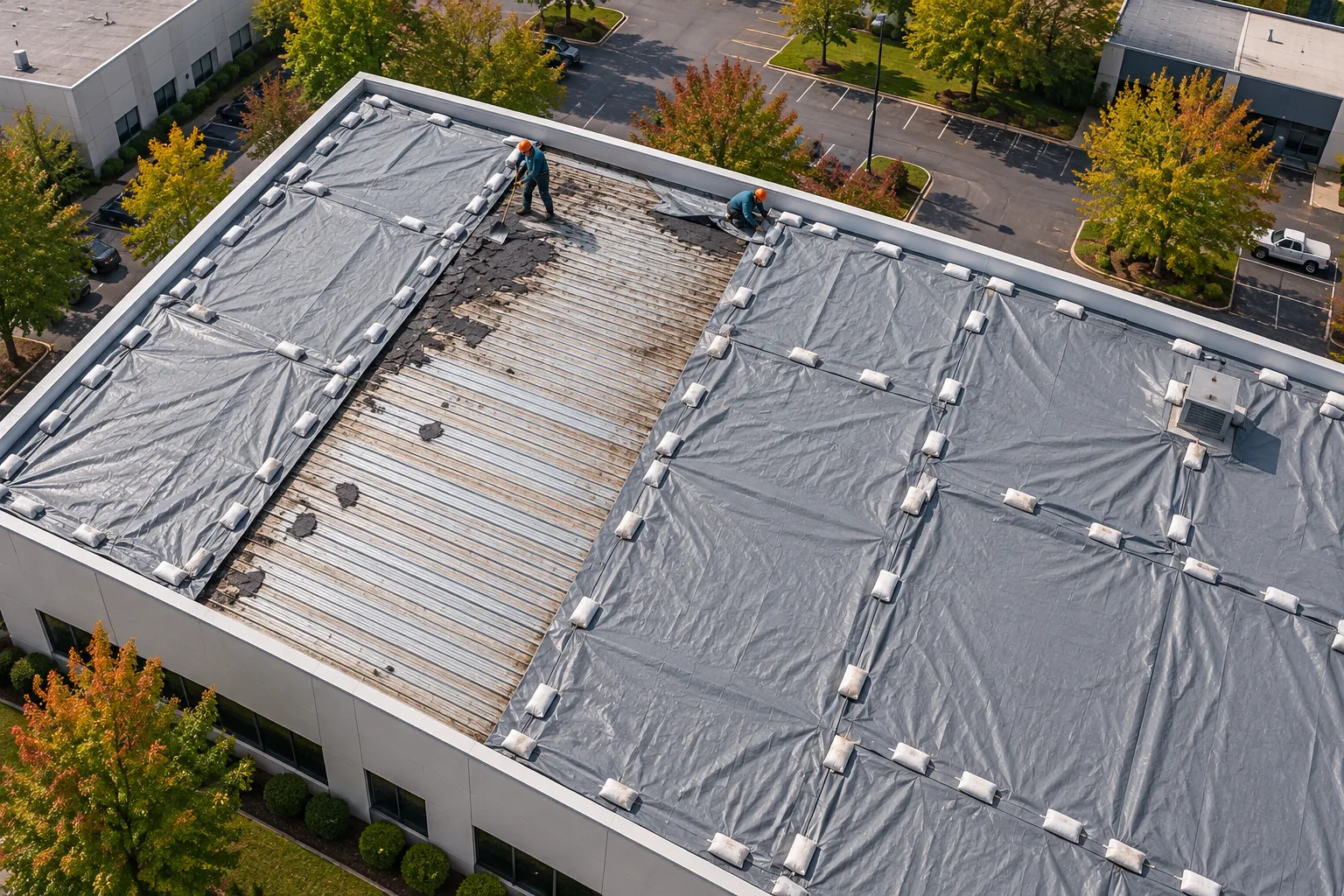
A Jeffersontown flat roofing contractor settles this with core cuts. The building code limits recovers, and wet insulation always comes out.
Recover
- Deck inspection
- Limited to core cuts
- Wet insulation
- Must be removed first
- Haul-off
- Small
- Roof height
- Added over the old roof
- Interruption
- Lower
Tear-Off
- Deck inspection
- Full view of the deck
- Wet insulation
- Removed with the roof
- Haul-off
- Large
- Roof height
- Reset from the deck
- Interruption
- Higher
Flat Roof Problems That Lead to Replacement
Older low-slope roofs on strip centers and offices tend to fail in the same six places.
Ponding Between Drains
Water that stands for days after rain shows the slope falls short. Tapered insulation and crickets in the new assembly move it to the drains.
Built-Up Roofs Under Gravel
Older strip centers often carry built-up or modified bitumen roofs under gravel or a cap sheet, with base flashing cracked at the walls.
Wet Boards in Several Bays
Spread-out wet insulation adds weight and loses its value. Once it spans many sections, a recover is off the table.
Low Gravel Stops
Edge metal set for an old, thinner roof sits too low once code-required insulation goes on, so it gets replaced with cleated edge metal.
Clogged Strainers and Leaders
Missing strainers let debris into the leaders, and water backs up at the drain bowl during heavy rain.
Parapet Coping Gaps
Coping caps with loose cleats let water into the wall and down behind the base flashing.
Flat Roofing Options for Jeffersontown
Every flat roof job pairs a membrane with an insulation plan. These are the four pieces we size for each roof.
TPO or EPDM Membrane
White welded TPO for cooled space, or wide-sheet EPDM for broad, simple roofs. The way the building is used decides which one.
Tapered Insulation
Boards cut to slope toward each drain, with crickets behind units and between drains, fix ponding in the new assembly.
Cover Board
A rigid board over the insulation shields it from foot traffic and gives a recover a firm base over the old roof.
Edge Metal and Gutters
New cleated edge metal, coping, and resized gutters finish the perimeter to a tested wind design.
Benefits of a New Flat Roof
What a rebuilt low-slope assembly does for the building under it.
Water Leaves the Roof
Tapered boards and crickets send rain to drains instead of low spots.
Code-Level Insulation
A tear-off brings insulation up to what the energy code asks for.
Wind-Rated Edges
New cleated edge metal holds the perimeter where wind lifts first.
One Clean Assembly
Layers stack in order from deck to membrane, without old roofs trapped beneath.
Curbs Reflashed
Every curb and pipe gets new flashing run to the height of the new surface.
Walls Sealed
Base flashing and counterflashing close the joint at each parapet wall.
Traffic Paths
Walkway pads keep service traffic off the new seams near rooftop units.
Core Records
Core results and product data stay in the roof file for the next owner.
Water Standing on Your Roof?
Ponding that lasts for days loads the deck and soaks the insulation. Ask for an inspection that maps the low spots and the drains.
How a Flat Roof Replacement Runs
The order of work for a low-slope tear-off or recover on an occupied building.
Inspect Your Roof
Core cuts count the layers and check every board for moisture, and the drain layout gets mapped. Those results decide recover or tear-off and the taper plan.
Remove What Has to Go
On a tear-off, old layers come off down to the deck in sections, so each part is dried in before evening. Damaged deck is flagged for repair.
Build In the Slope
Tapered insulation and crickets go down from the drains outward, then the flat insulation and cover board finish the base.
Install the Membrane
TPO or EPDM goes on in full sheets, with seams welded or taped and probed, and flashings run up each wall and curb.
Edges, Drains, and Checks
Drains get new clamping rings and strainers, edge metal and coping go on, and a final walk checks every seam.
Top Flat Roofing Choices for Jeffersontown Strip Centers
The membrane under a flat roof job comes from these services, plus repairs where a full rebuild can wait.
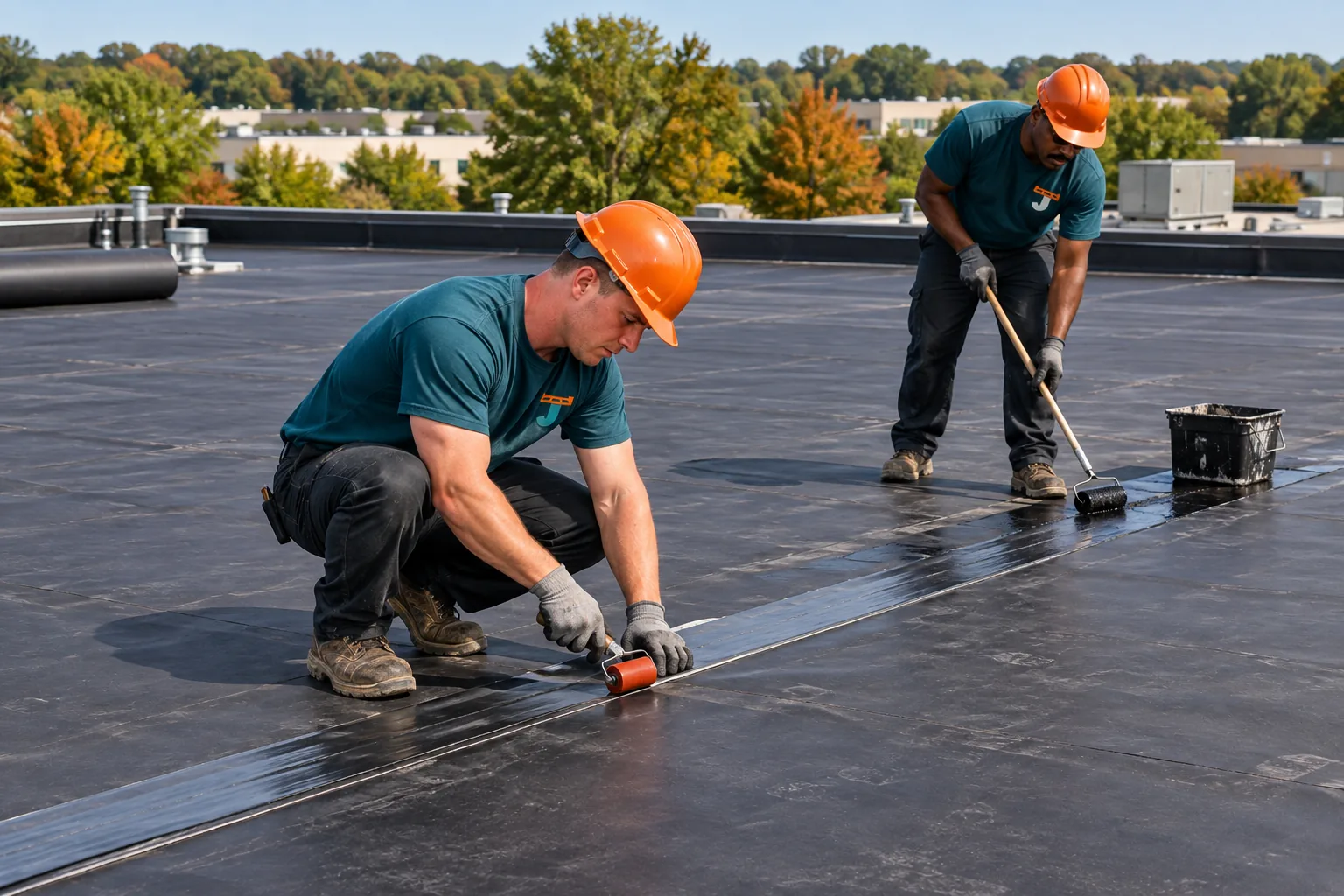
EPDM Roofing
Wide rubber sheets for broad, simple low-slope roofs and additions.
EPDM roofing in Jeffersontown →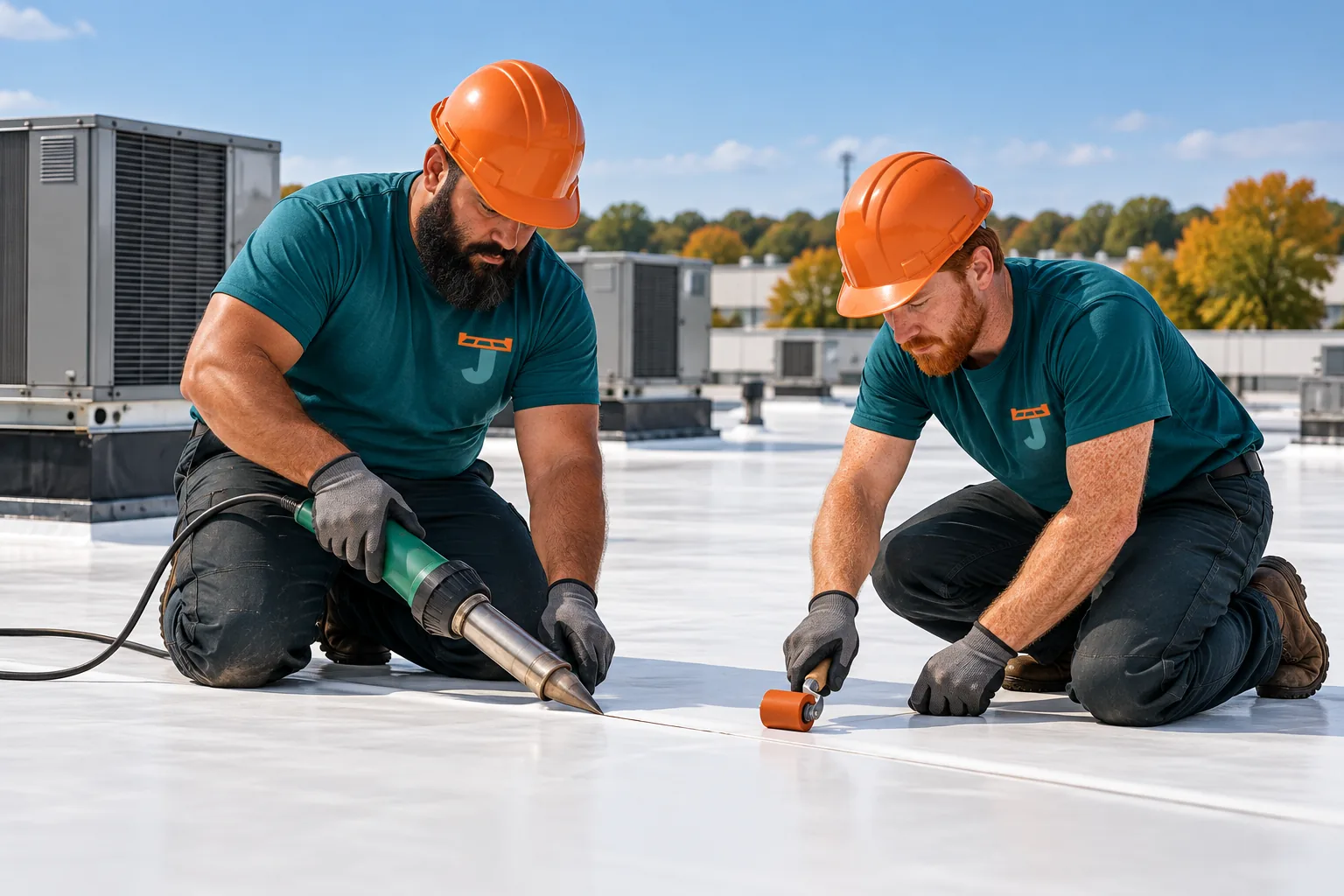
Commercial Roof Repair
Local fixes for one wet corner or a leaking curb while the rest stays dry.
Commercial roof repair in Jeffersontown →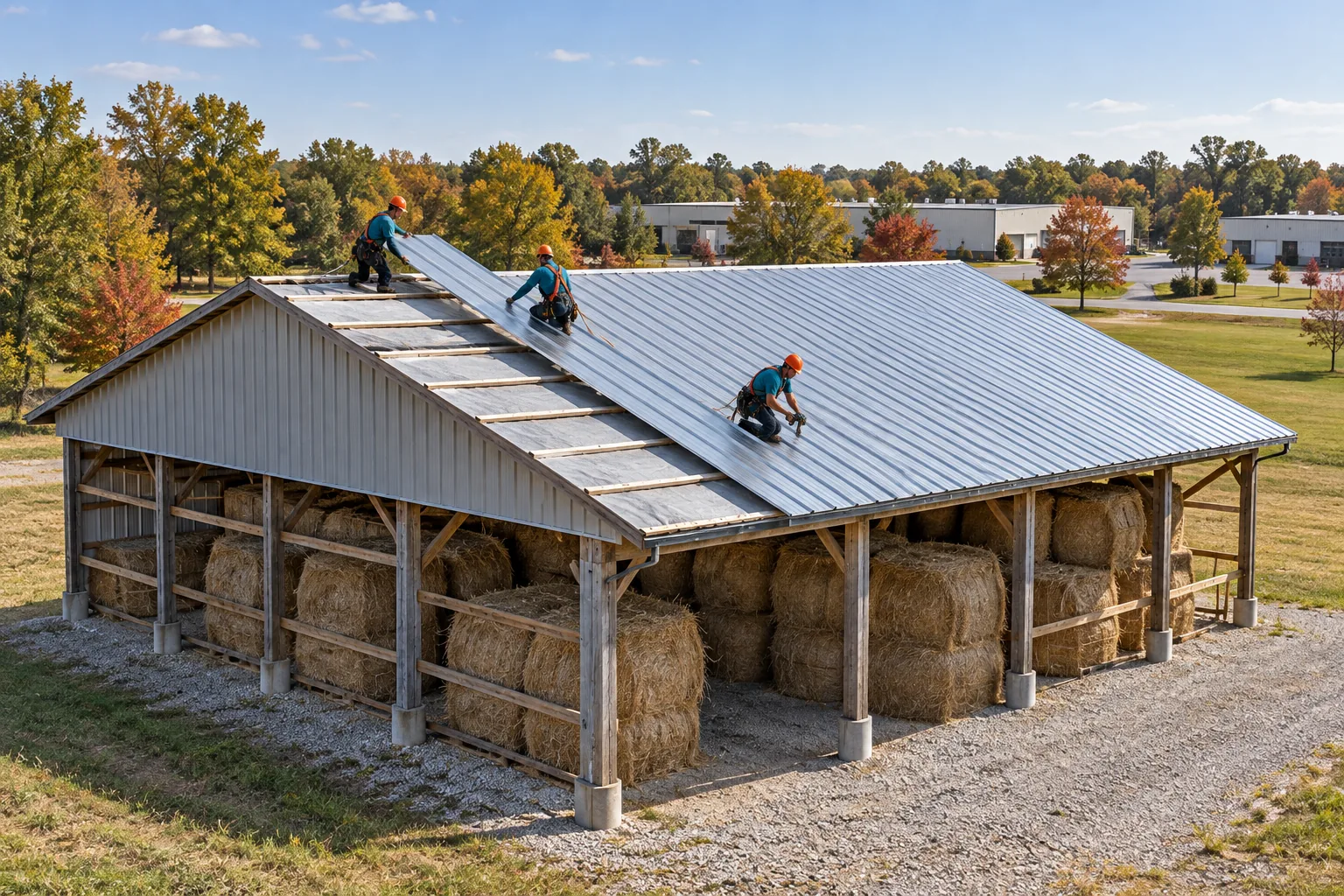
Metal Roofing
Retrofit framing that adds pitch over a flat roof that keeps ponding.
Metal roofing in Jeffersontown →Low-Slope Questions for a Jeffersontown Flat Roofing Contractor
Answers on drainage, recovers, older roofs, and replacement on low-slope buildings.
Most Asked
What does flat roof replacement in Jeffersontown, KY involve?
Flat roof replacement in Jeffersontown, KY rebuilds the whole assembly: deck repairs where needed, insulation to code, tapered boards for drainage, a cover board, a TPO or EPDM membrane, and new flashing and edge metal. Core cuts decide first whether the old roof comes off or a recover goes over it.
How does tapered insulation stop ponding on a flat roof?
Using tapered insulation to stop ponding on a flat roof means boards cut thicker at the high points and thinner at the drains, so the surface slopes toward each drain bowl. Crickets behind units and between drains split the water so nothing sits for days.
When can you recover over an existing flat roof?
A recover over an existing flat roof works when the insulation is dry and only one roof is in place. A cover board goes over the old roof and the new membrane goes on top. The code limits recovers over wet, badly worn, or already recovered roofs.
What happens to built-up roofs on strip centers?
Built-up roof replacement on strip centers usually means a tear-off, since gravel surfaces and cap sheets hide wet felts. Each roof area gets its own scope, drains, and edge metal, and mansards out front are priced as separate areas.
Can a flat roof be replaced in winter?
On dry days, yes. Welded TPO and cold-weather adhesives work in winter, and crews open only what they can close that day. Spring and fall bring the steadiest working weather, so larger tear-offs are often planned for those seasons.
Does a new flat roof raise the curbs and parapets?
Often. Added insulation lifts the roof surface, which can leave curbs and wall flashings short. Curbs get extensions or adapters, parapet coping is reset higher, and counterflashing is cut into the masonry above the new base flashing.
How many drains does a flat roof need?
Enough that tapered insulation can move water from every section to a drain without long, flat runs. The building code also requires secondary drainage, as overflow drains or scuppers through the parapet. A wide roof with few drains gains the most from added taper and crickets.
Bring In a Jeffersontown Flat Roofing Contractor
Tell us where water stands after rain and how many roofs may be stacked up there. We will core it and lay out the rebuild.