Commercial Roofing · Jeffersontown, KY
Jeffersontown Commercial Roofing Contractor
TPO, EPDM, and Metal Roofs for Warehouses, Offices, and Plants
As a Jeffersontown commercial roofing contractor, we install, replace, and repair TPO, EPDM, flat, and metal roofs on commercial and industrial buildings.
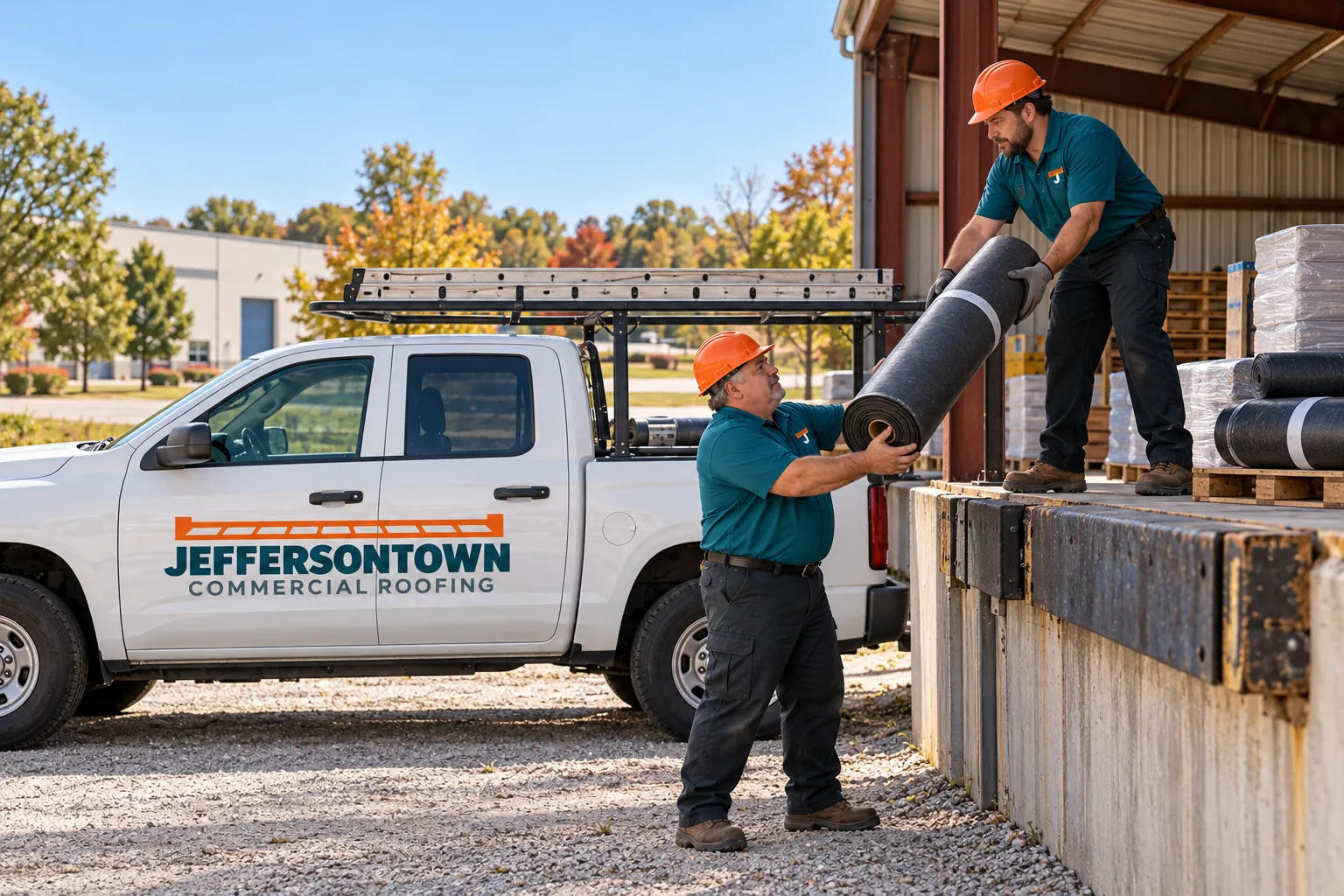
- Roof walk before any price
- Core cuts before tear-off calls
- Open sections dried in nightly
- Permit office checked by parcel
Benefits of New Commercial Roofing in Jeffersontown
Hiring a Jeffersontown commercial roofing contractor for a full replacement changes how the seams, drains, and edges handle water. These are the gains owners see once the new assembly is in place.
Dry Ceiling Tiles
Water stops tracking from open laps and cracked pipe boots into the ceiling grid once the membrane and flashings are new.
Water Reaches Drains
Tapered insulation and crickets steer rain toward each drain bowl, so ponding rings stop forming behind rooftop units.
Insulation Brought Up
A tear-off lets the new roof carry the insulation thickness the energy code asks for, measured from the deck up.
Cooler Roof Surface
White TPO or a light metal finish reflects more summer sun than a black or gravel roof over conditioned space.
Secure Roof Edges
New cleated edge metal and coping follow a tested wind design at the perimeter, where wind starts lifting a roof.
Curbs at Proper Height
Rooftop unit curbs get raised or adapted so their flashing reaches the height the new roof surface needs.
Protected Service Paths
Walkway pads to each unit keep technicians' boots off welded laps and seam tape along the paths they walk.
One Roof File
Core results, product data, and the permit number go into a single file you can hand to the next tenant or buyer.
Roof Problems We Find on Jeffersontown Buildings
Most calls start with a stain on a ceiling tile or a puddle that sits for days. These six conditions point to what the roof needs.
Open Seams and Laps
Heat-welded TPO laps split where a weld ran cold, and EPDM seam tape lets go when dust or humidity got under it at install. Water follows the open lap until it finds a fastener hole or a deck joint.
Ponding Behind Units
Water standing for days behind a rooftop unit or between drains shows where the slope falls short. It loads the deck, softens insulation, and leaves dirt rings on the membrane around the drain bowl.
Wet Insulation
Boards that soak up water lose their insulating value and add weight to the deck. An evening infrared scan and a few core cuts show how far the wet area reaches before anyone prices a tear-off.
Loose Coping and Edge Metal
Coping caps with failed cleats rattle in wind and let water behind the wall flashing. Gravel stops on older strip centers often sit lower than a new roof surface would need.
Backed-Out Panel Screws
On R-panel steel roofs, screws work loose as panels heat and cool, and their rubber washers crack. Each loose screw turns into a small hole that drips onto stock and equipment below.
Leaks at Curbs and Pipes
Pitch pans, cracked pipe boots, and short curb flashings leak first on most low-slope roofs. A curb that sat too low under the old roof keeps leaking until it is raised.
Top Commercial Roofing Systems for Jeffersontown Roofs
Six services cover the roofs on most commercial buildings here, from one seam repair to a full plant reroof. Each card names where that roof lets water in first.
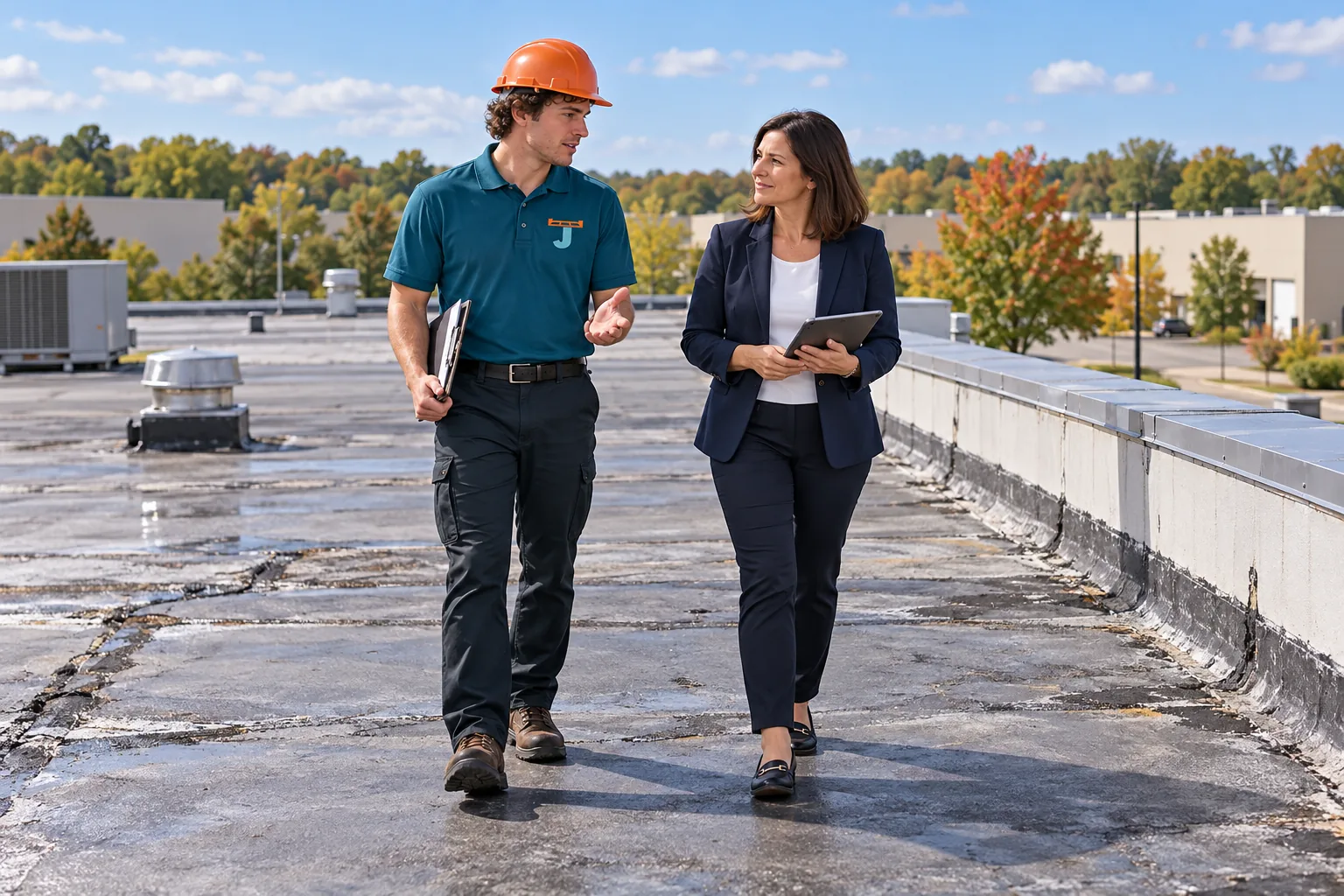
Commercial Roof Repair
Repairs fix a few open seams, a leaking curb, or one wet corner without replacing the whole roof. Core cuts tell us whether the damage stays local.
Where Water Gets In
- Split laps at welded or taped seams
- Short flashings around unit curbs
- Cracked drain bowls and loose clamping rings
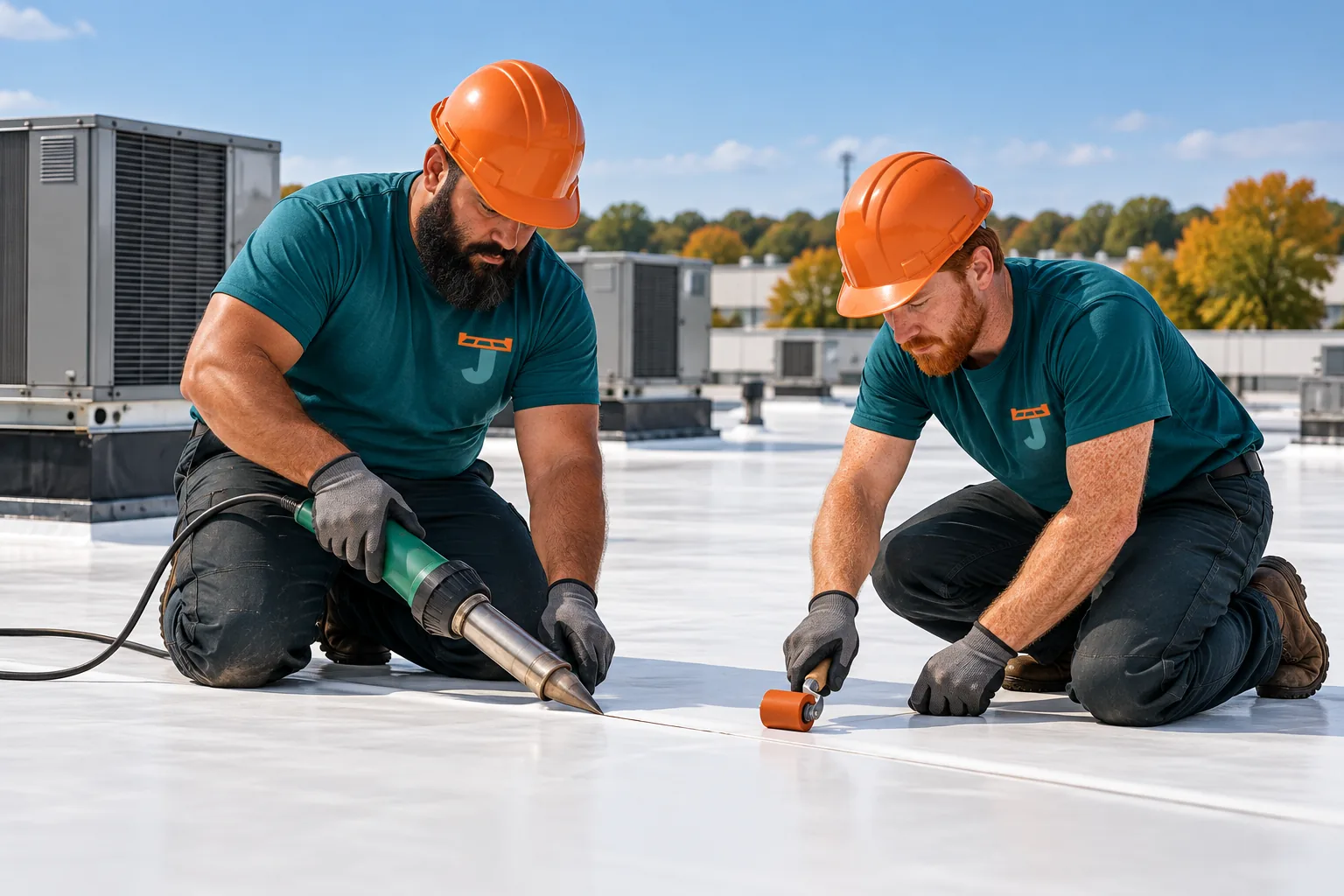
TPO Roofing
White TPO sheets with hot-air welded seams fit most warehouse, office, and retail roofs. Thickness and attachment are picked for foot traffic and wind exposure.
Where Water Gets In
- Cold welds missed during seam probing
- Grease from kitchen exhaust fans
- Fastener plates fluttering in high wind
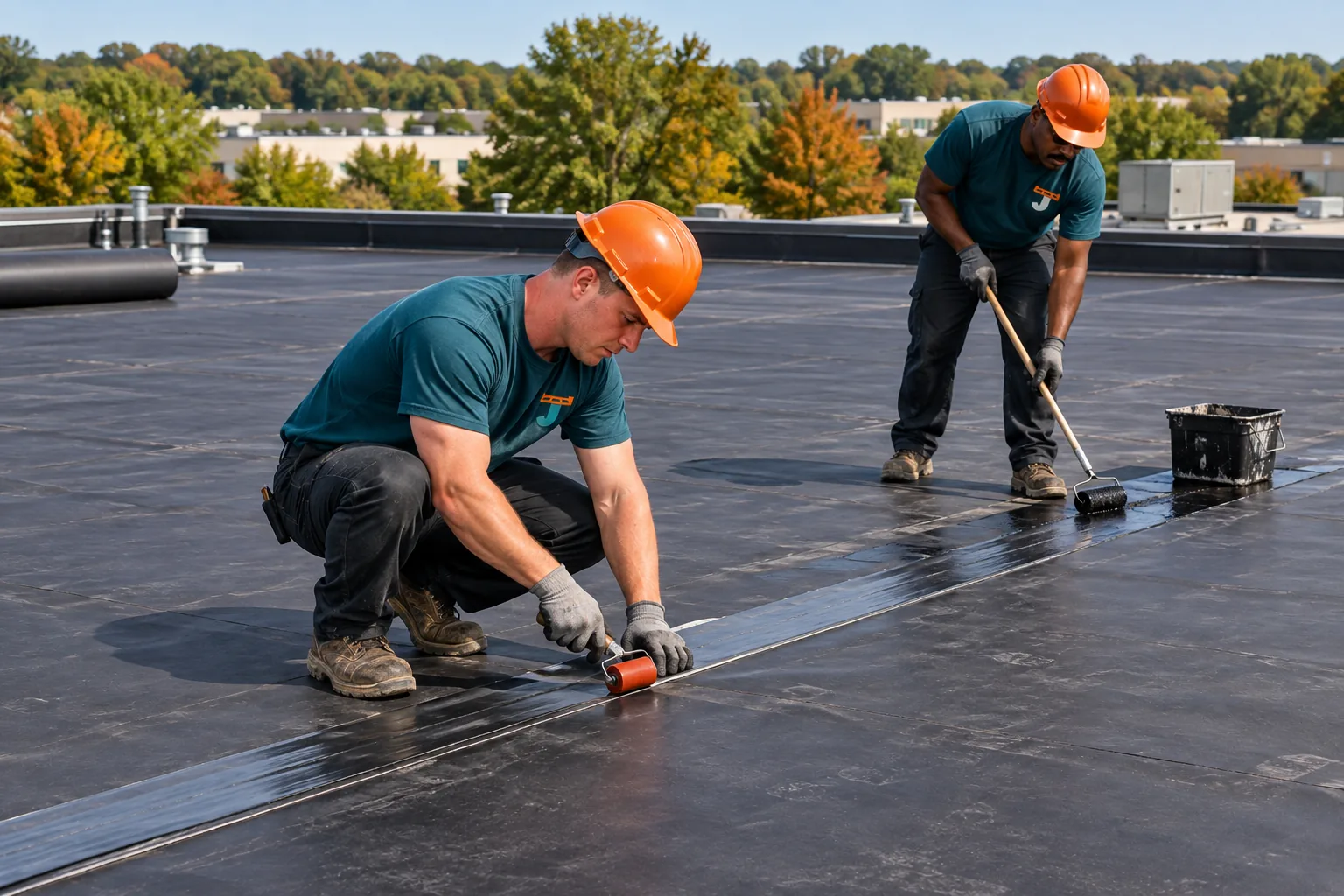
EPDM Roofing
EPDM rubber goes down in wide sheets with few seams, which suits broad, simple roofs on additions, warehouses, and older flat-roofed offices.
Where Water Gets In
- Seam tape laid before primer flashed off
- Unpatched seam ends and T-joints
- Lap edges loosened by summer heat
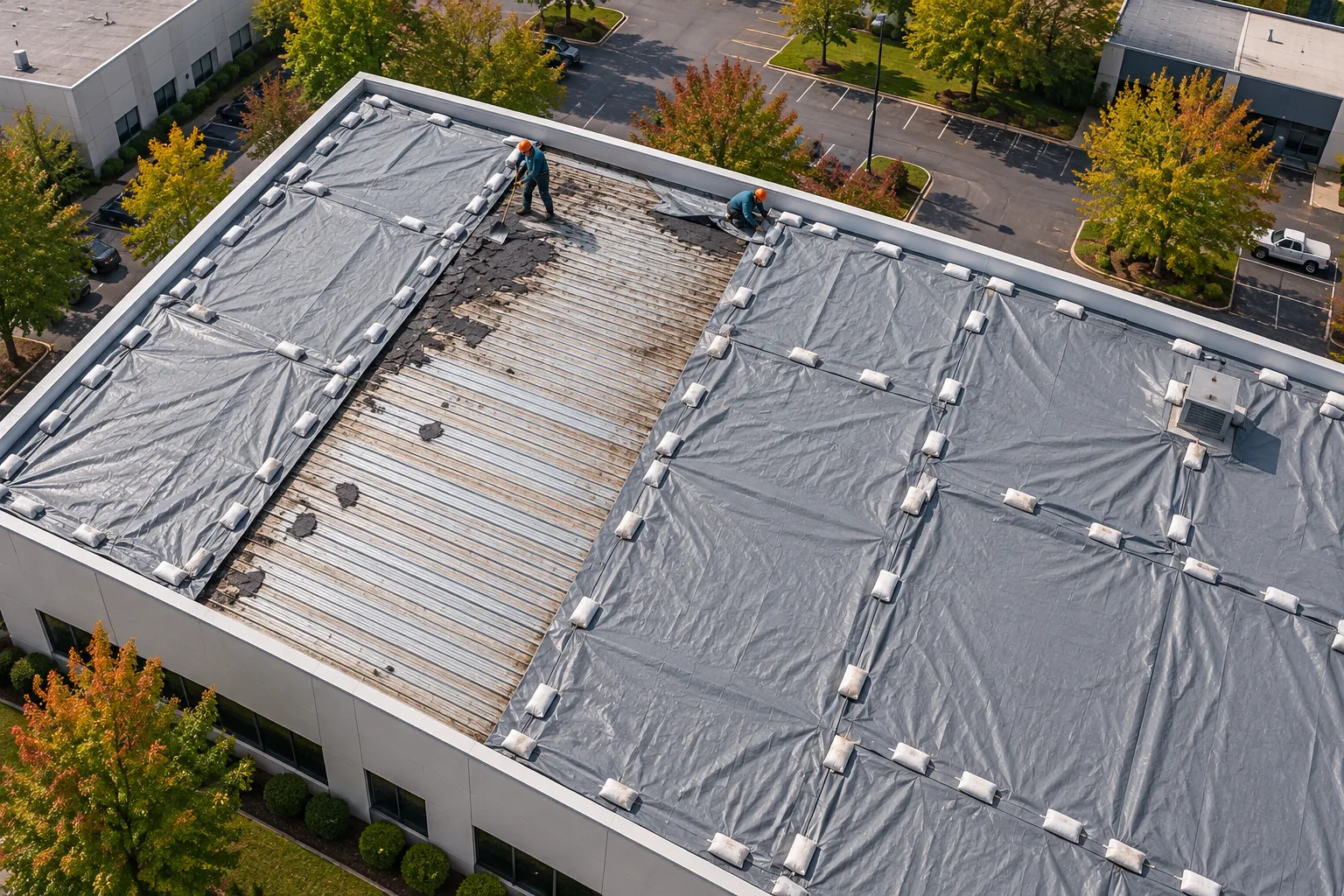
Flat Roofing
Flat roofing covers the whole low-slope assembly from deck to edge metal, including the built-up and mod bit roofs left on older strip centers.
Where Water Gets In
- Low spots without tapered insulation
- Base flashing at parapet walls
- Gravel stops below the new roof height
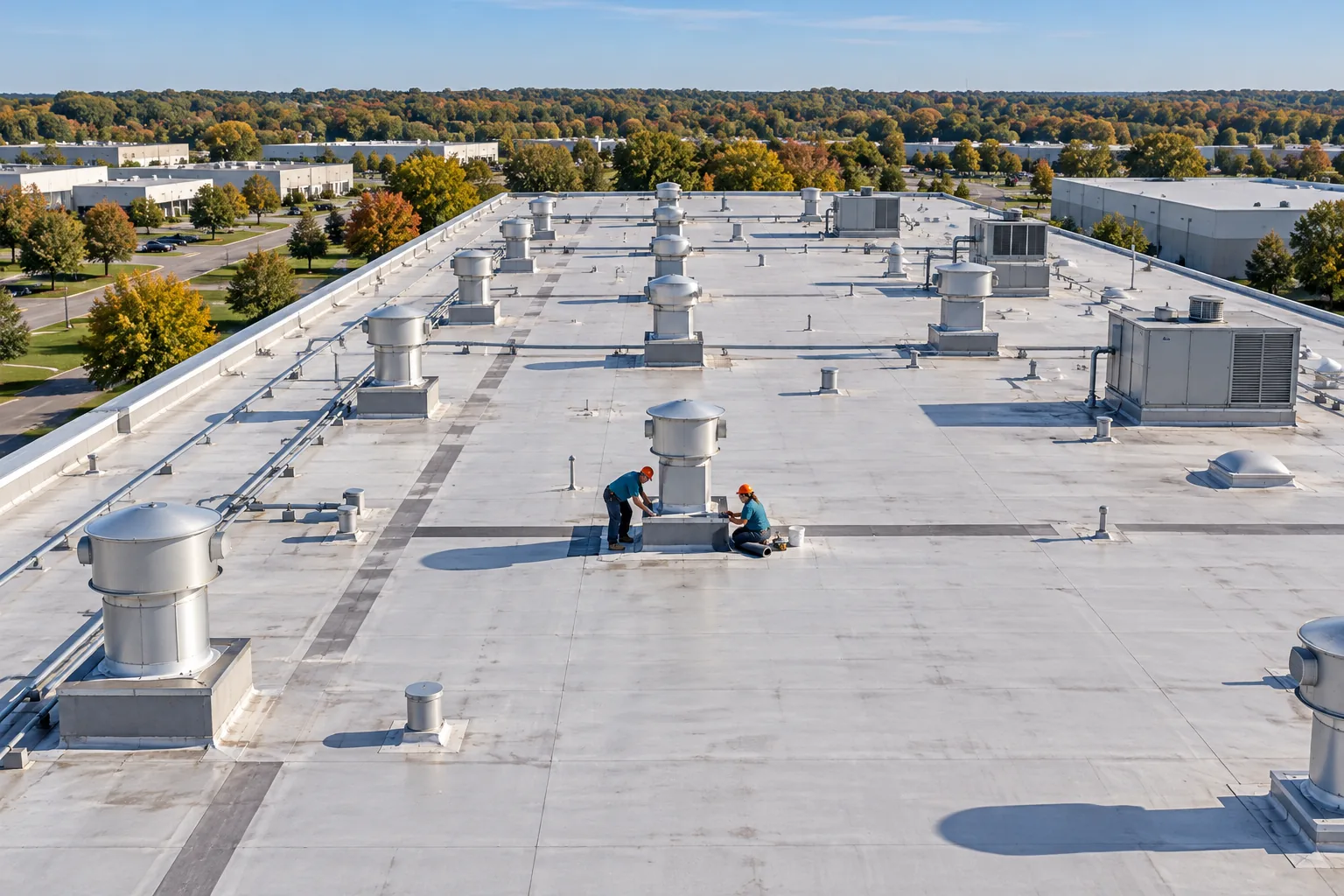
Industrial Roofing
Plants and distribution buildings need roofs planned around exhaust fans, process vents, long drain runs, and production that keeps going under the deck.
Where Water Gets In
- Residue around exhaust fan curbs
- Long runs between too few drains
- Worn paths to rooftop units
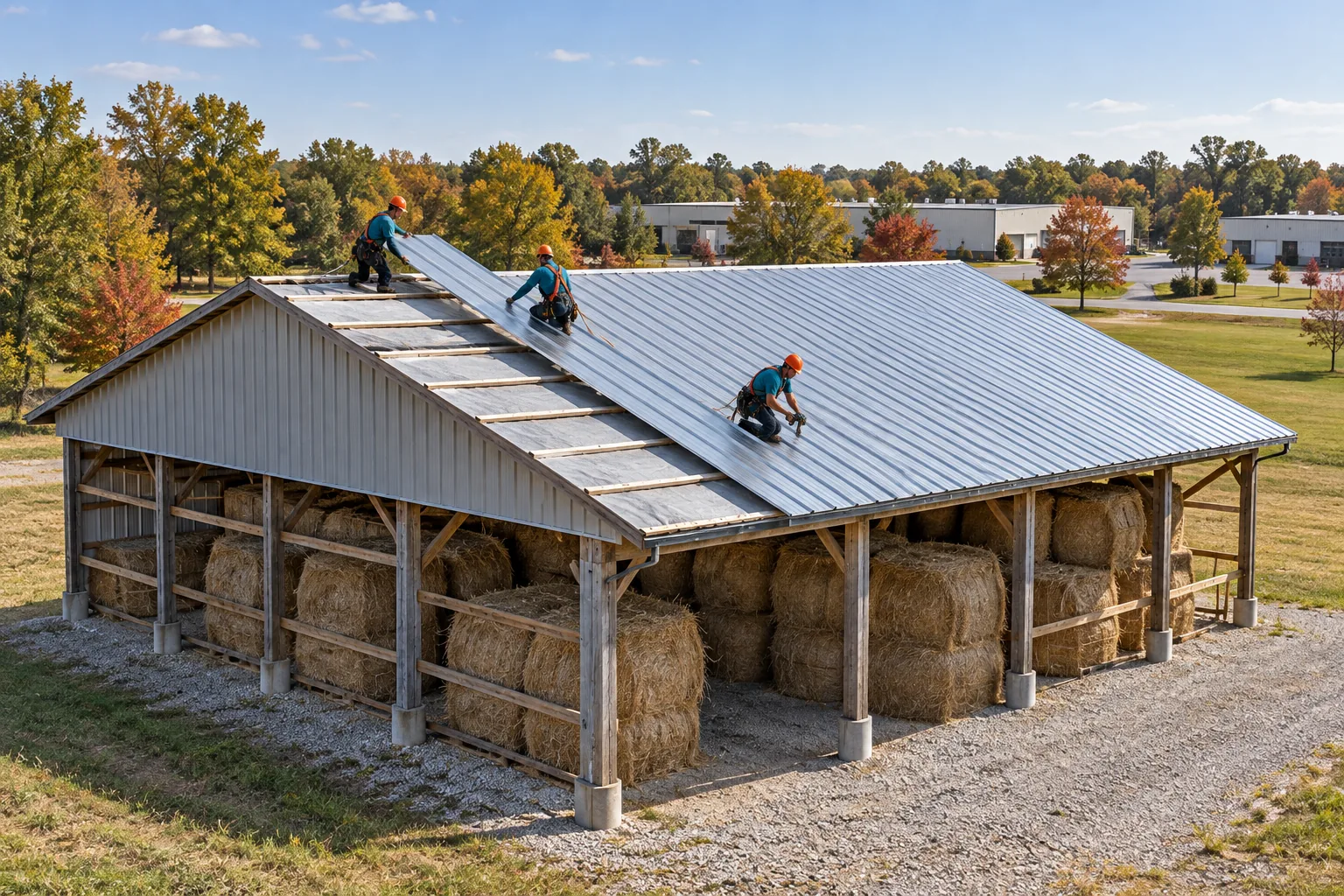
Metal Roofing
Standing seam and R-panel steel fit shops, plants, and pitched buildings, and retrofit framing can add pitch over a flat roof that ponds.
Where Water Gets In
- Exposed screws and aging washers
- End laps and side seams
- Curb openings without an upslope diverter
Brown Ring on a Ceiling Tile?
Call and describe where the stain sits, what is above it on the roof, and when it started. That tells the inspection where to look first.
How a Roof Job Runs From Core Cut to Edge Metal
Every job follows the same order, whether it ends in a repair or a full replacement. Pick a stage to see what happens on the roof.
Inspect Your Roof
We walk the whole roof, photograph the drains, curbs, seams, and edge metal, and cut cores where a replacement is on the table. Each core shows the layers, the insulation, its moisture, and the deck under it.
Repair, Recover, or Tear Off
Dry insulation and one existing roof can open the door to a recover with a cover board. Wet boards across many sections, a second existing layer, or rusted deck point to a full tear-off.
Pull the Right Permit
Inside Jeffersontown limits, the city's Department of Permitting, Planning, and Enforcement issues the permit. Neighboring small cities and counties each have their own first step, checked against the parcel record.
Tear Off and Dry In Daily
Crews open only the deck area they can close by evening and tie each day's work in with a temporary night seal. Insulation, cover board, and membrane go down in that order.
Flash, Edge, and Walk It
Curbs, pipes, and walls get their flashings, new edge metal and coping go on, and walkway pads lead to each unit. A final walk checks every seam before the roof file is closed.
Patch One Spot or Replace the Whole Roof?
The answer comes from how far the damage reaches. Here is how the two paths compare on a typical low-slope commercial roof.
Targeted Repair
- Damage
- A few open seams or one curb
- Insulation
- Wet in one corner at most
- Deck
- Solid under the problem area
- Work zone
- Small, around the leak
- Records
- Repair logged with photos
Full Replacement
- Damage
- Seams failing across the roof
- Insulation
- Wet across many sections
- Deck
- Rust or soft spots in several bays
- Work zone
- Phased sections, dried in nightly
- Records
- New assembly, permit, product data
Towns We Cover From Jeffersontown
Warehouses, strip centers, offices, churches, and plants in the towns below are where we replace and repair commercial roofs most. Outside them? call us or send us a message.
Jeffersontown
Inside city limits, including Bluegrass Commerce Park's roughly 850 businesses, roof permits come from the city's own department.
Buechel
Louisville Metro issues permits here, so the parcel lookup that separates it from West Buechel comes first.
Crestwood
Small retail and office roofs here carry several rooftop units, so curb raises and HVAC permits shape the schedule.
Douglass Hills
The City Engineer signs a Letter of Compliance before Louisville Metro issues the roof permit for any commercial building.
Fern Creek
Strip centers along Bardstown Road pair flat roofs with metal mansards, and each roof area gets its own line in the scope.
Graymoor-Devondale
Office and church roofs with parapets and through-wall scuppers; the current city permit form comes from City Hall.
Highview
Small offices, shops, and churches with one roof and a single drain fit Louisville Metro's small commercial project path.
Hurstbourne
Low-slope office roofs with metal mansards and canopies, where the city's Letter of Compliance starts the paperwork.
Hurstbourne Acres
A separate city from Hurstbourne, with shopping center and office roofs along Hurstbourne Lane and Bunsen Parkway.
La Grange
Oldham County inspects the work, and visible changes like taller parapet caps can also reach the Board of Adjustments.
Middletown
Cranes and dumpsters set in a city street need the right-of-way encroachment permit and a traffic control plan.
Mount Washington
Retail, restaurant, and church roofs along US 31E mix flat and metal sections under one city building permit.
Shelbyville
City limits decide the inspector, and county jobs on former farm parcels need a physical address before panels are ordered.
Simpsonville
Plant roofs on the scale of a 380,000-square-foot building get phased tear-offs, many curbs, and long edge metal runs.
Taylorsville
Metal shops and storage buildings here go through the Spencer County building inspector, with eave trim and ridge caps checked.
West Buechel
Its own home-rule city, with business license and occupational tax rules that reach contract roofing crews working inside it.
Questions Owners Ask a Jeffersontown Commercial Roofing Contractor
Short answers to what owners ask most before a replacement, with more in the full commercial roofing FAQ.
Most Asked
What does a full low-slope roof installation include in Jeffersontown?
The whole assembly, from the deck up to the edge metal: a steel, wood, or concrete deck, a vapor retarder where the building's use calls for one, rigid insulation tapered toward drains where needed, a cover board, the TPO or EPDM membrane, and flashings at walls, curbs, and pipes, finished with edge metal and gutters.
Who issues building permits for commercial roof replacement in Jeffersontown?
Inside city limits, the city's Department of Permitting, Planning, and Enforcement issues them under an expanded jurisdiction agreement with the state, which keeps uses such as schools, hospitals, day cares, and nursing homes. The commercial permit application is on the city's permits page; bring a roof plan with drains, curbs, and edge metal marked.
What drives the cost of a commercial roof replacement?
Roof size, the number of existing layers, and the amount of wet insulation move the price most. Membrane type and thickness, code-required insulation, tapered insulation for ponding, edge metal and coping, curb raises, and crane days come next. A price follows an inspection with core cuts, because layers and moisture stay hidden until the roof is opened.
What should Bluegrass Commerce Park owners plan for before replacing a roof?
For a Bluegrass Commerce Park roof replacement, plan around the tenants. The city counts about 850 businesses and more than 30,000 employees in the park, and many buildings split one roof across several tenant spaces. Map each space to the roof plan, note every rooftop unit and its owner, and schedule tear-off sections around dock activity.
Can tenants keep working while the roof is replaced?
Yes, in most buildings. Crews open only the deck area they can close before evening and seal each day's edge to the old roof overnight. Tenants under open sections get notice of crane days and air intake shutdowns, and staging stays clear of dock doors.
Book a Jeffersontown Commercial Roofing Contractor for Your Roof
Tell us where the roof leaks or how old it is, and we will set up an inspection, with core cuts where a replacement looks likely.