EPDM Roofing · Jeffersontown, KY
Jeffersontown EPDM Roofing Contractor
Extend the Life of Broad Flat Roofs With Wide Rubber Sheets
As a Jeffersontown EPDM roofing contractor, we install EPDM rubber roofs in wide sheets on warehouses, additions, and older flat-roofed offices.
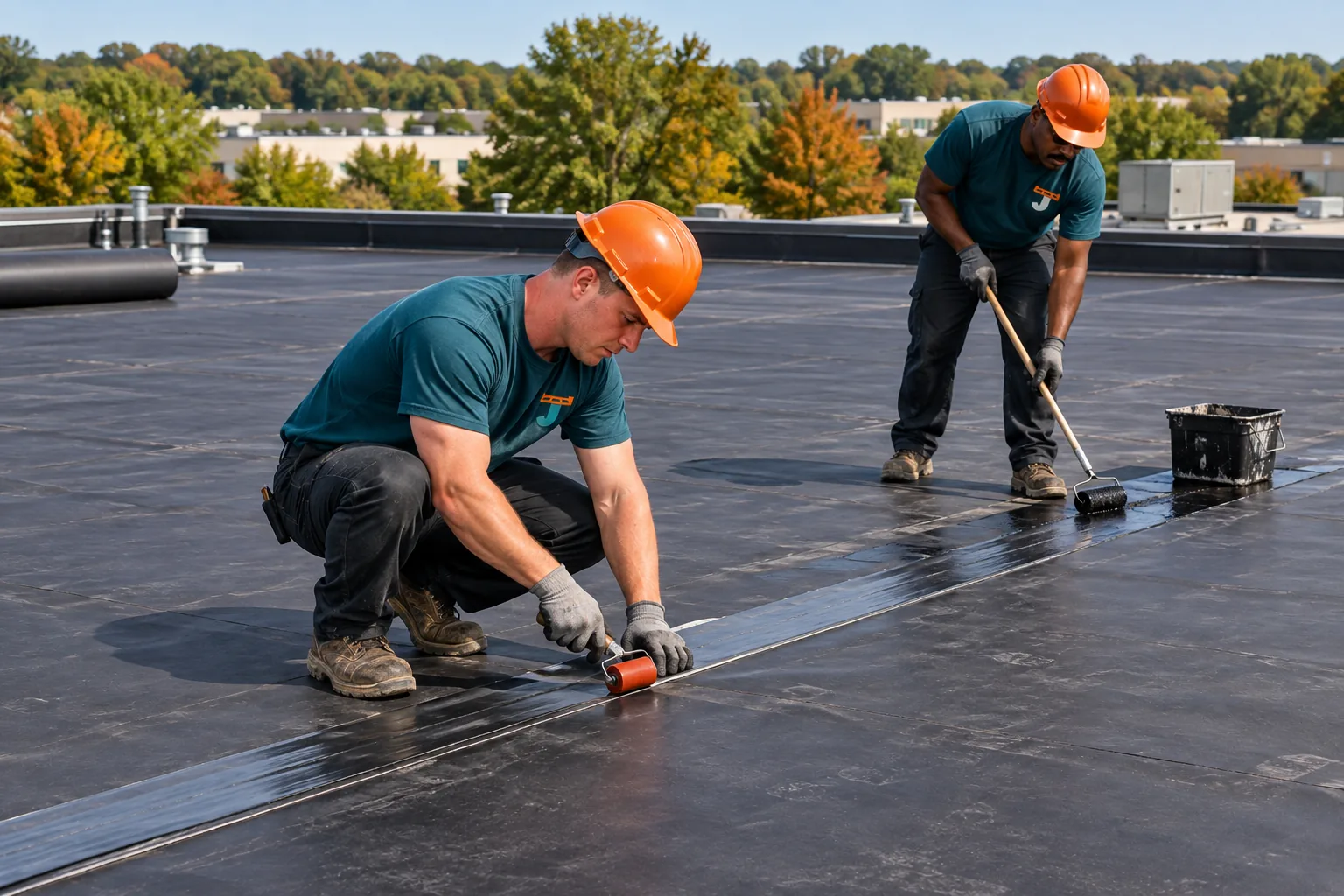
- Primer and seam tape laps
- Flexible in cold weather
- Wide sheets, fewer seams
- Polyiso insulation under it
Stay With EPDM or Switch to TPO?
A Jeffersontown EPDM roofing contractor gets this question on almost every old rubber roof. Either works on most low-slope roofs; these details decide it.
Stay With EPDM
- Seam joining
- Tape and primer
- Surface color
- Black, white offered
- Nearby roofs
- Easy tie-in to EPDM
- Summer heat
- Higher with black
- Ballasted roof
- Familiar fit for stone
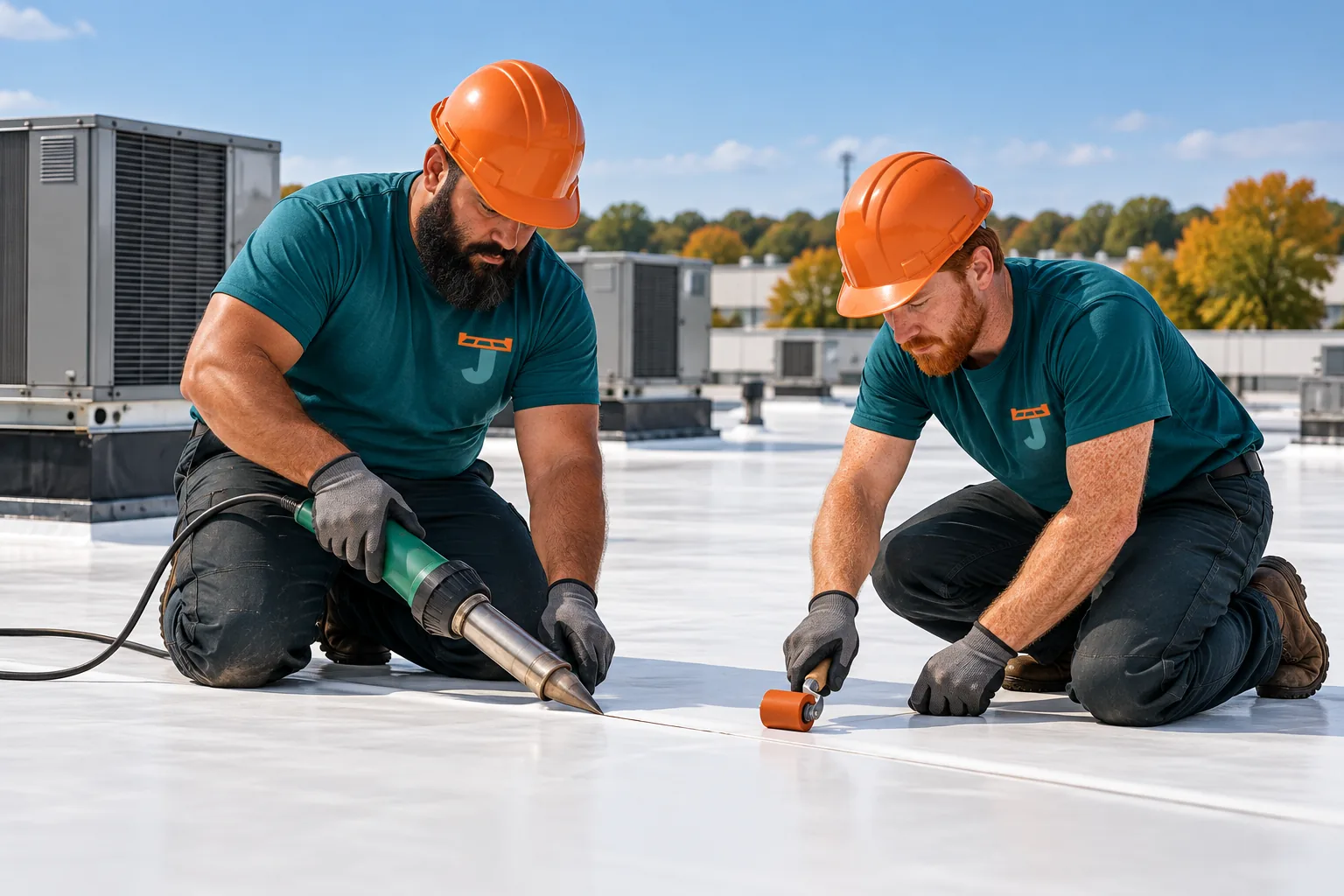
Switch to TPO
- Seam joining
- Hot-air welding
- Surface color
- White standard
- Nearby roofs
- Needs a transition detail
- Summer heat
- Lower with white
- Ballasted roof
- New attachment plan
Signs an EPDM Roof Has Reached Its End
Rubber roofs fail at the laps and edges well before the field sheet wears through.
Open Laps and Seam Ends
Tape that went down before the primer flashed off, often on a humid morning, opens later. Unpatched seam ends and T-joints let water start under the lap.
Shrinkage at Walls
An old EPDM sheet that pulls tight at walls and curbs bridges the corners and tears the flashing loose from the parapet.
Heat-Loosened Edges
Summer heat on a black roof loosens seam tape that never fully stuck, usually at laps that faced dust or moisture during install, near drains and corners.
Cracked Boots and Corners
Pre-molded pipe boots and hand-formed corner flashings crack with age and let water down the pipe.
Soft, Wet Insulation
A spongy feel underfoot means the polyiso under the sheet has taken on water, which a core cut confirms.
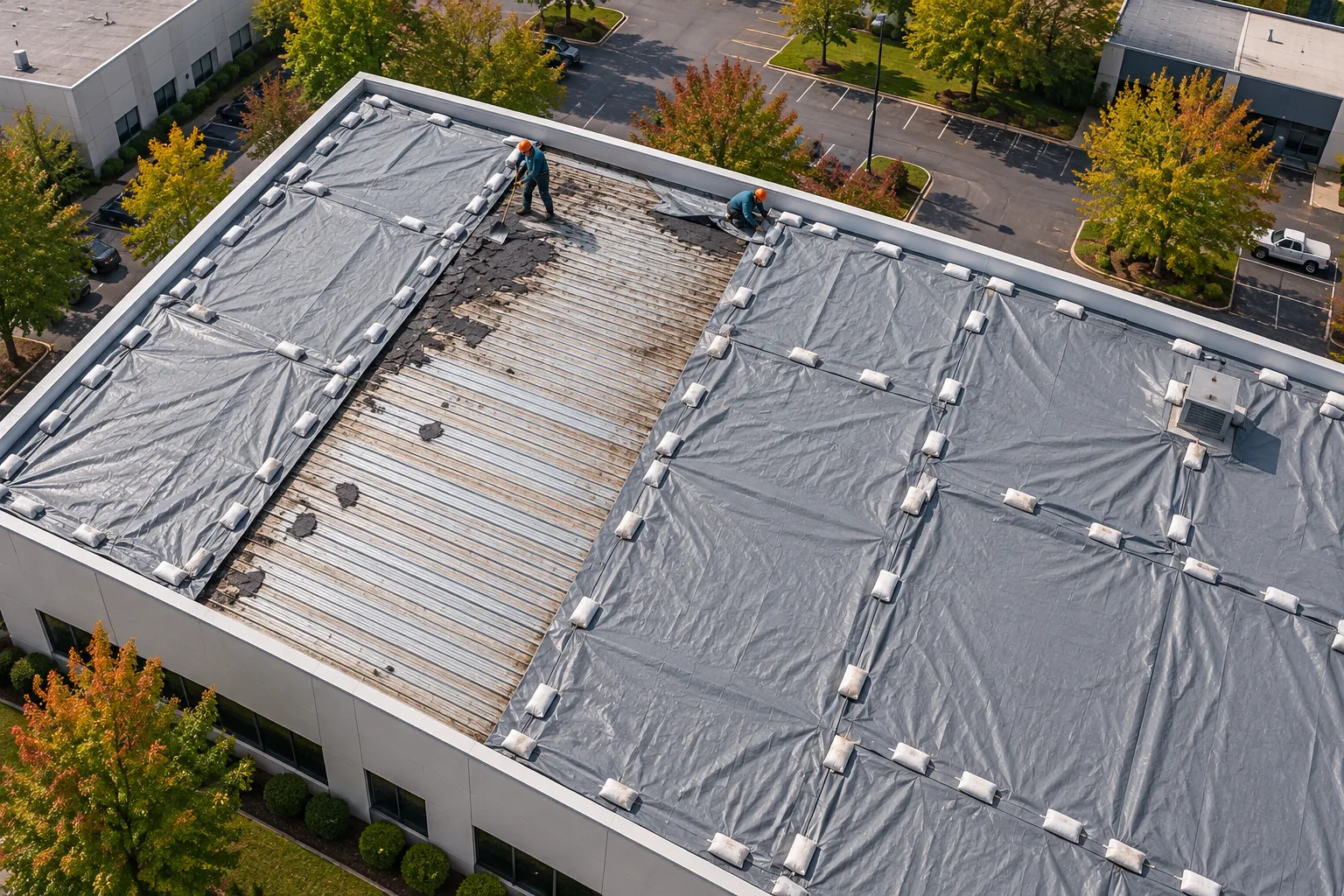
Ballast Moved Off Seams
On ballasted rubber roofs, river stone that wind or traffic pushed aside leaves the loose sheet exposed and seams uncovered.
EPDM Roofing Options for Jeffersontown
EPDM jobs differ mostly in sheet color, attachment, and what goes under the membrane.
Black EPDM
The standard rubber sheet, a fit for unconditioned storage and buildings where heat under the roof matters less.
White EPDM
A white-surfaced sheet for air-conditioned offices and retail, keeping the roof surface cooler without switching systems.
Fastened Over Polyiso
Steel decks take insulation screwed through with plates, spaced tighter at the corners and perimeter per the wind design.
Adhered on Concrete
Concrete decks often use adhesives in place of screws to hold the insulation and the membrane down.
Benefits of a New EPDM Roof
Where a new rubber roof pays off on broad, simple commercial roofs.
Fewer Seams
Wide sheets cover large, simple roofs with far fewer laps to maintain.
Cold-Weather Flex
EPDM stays flexible through repeated freezes on Kentucky roofs.
Easy Tie-Ins
New sections join existing EPDM on additions without a transition detail.
Stretchy Flashings
Uncured rubber forms by hand around corners, curbs, and pipes.
White Option
White EPDM cuts surface heat over offices and retail without changing systems.
Ballast Friendly
Ballasted rubber roofs can stay ballasted when the structure carries the stone.
Clean Drain Seals
New clamping rings grip the rubber sheet at every drain bowl.
Insulation Reset
Fresh polyiso under the sheet brings the roof up to current code thickness.
Rubber Roof Pulling at the Walls?
Shrinking EPDM tears flashing loose at parapets and curbs. Call and describe where the sheet looks tight, and we will check it.
Trusted EPDM Roofing for Jeffersontown Additions and Warehouses
The installation order for an EPDM replacement or a new rubber roof on an addition.
Inspect Your Roof
Core cuts show the insulation, its moisture, and the deck. We check the drain layout and the height left at curbs and parapets once new insulation goes down.
Set the Insulation
Polyiso boards are fastened through to the deck with screws and plates, or adhered on concrete, and tapered boards steer water toward drains and scuppers.
Lay the Rubber Sheet
Wide EPDM sheets go down over the insulation or cover board, relaxed before they are adhered or fastened so they lie flat.
Prime and Tape the Seams
Laps get cleaned and primed, and once the primer flashes off, factory seam tape goes down and is rolled flat with a silicone hand roller. Seam ends get cured cover patches.
Flash Every Detail
Uncured flashing forms the corners, pre-molded boots cover pipes, and termination bar holds the membrane at walls and curbs before edge metal goes on.
Related Roof Work
When rubber is not the right sheet, or the problem is local, these services take over.
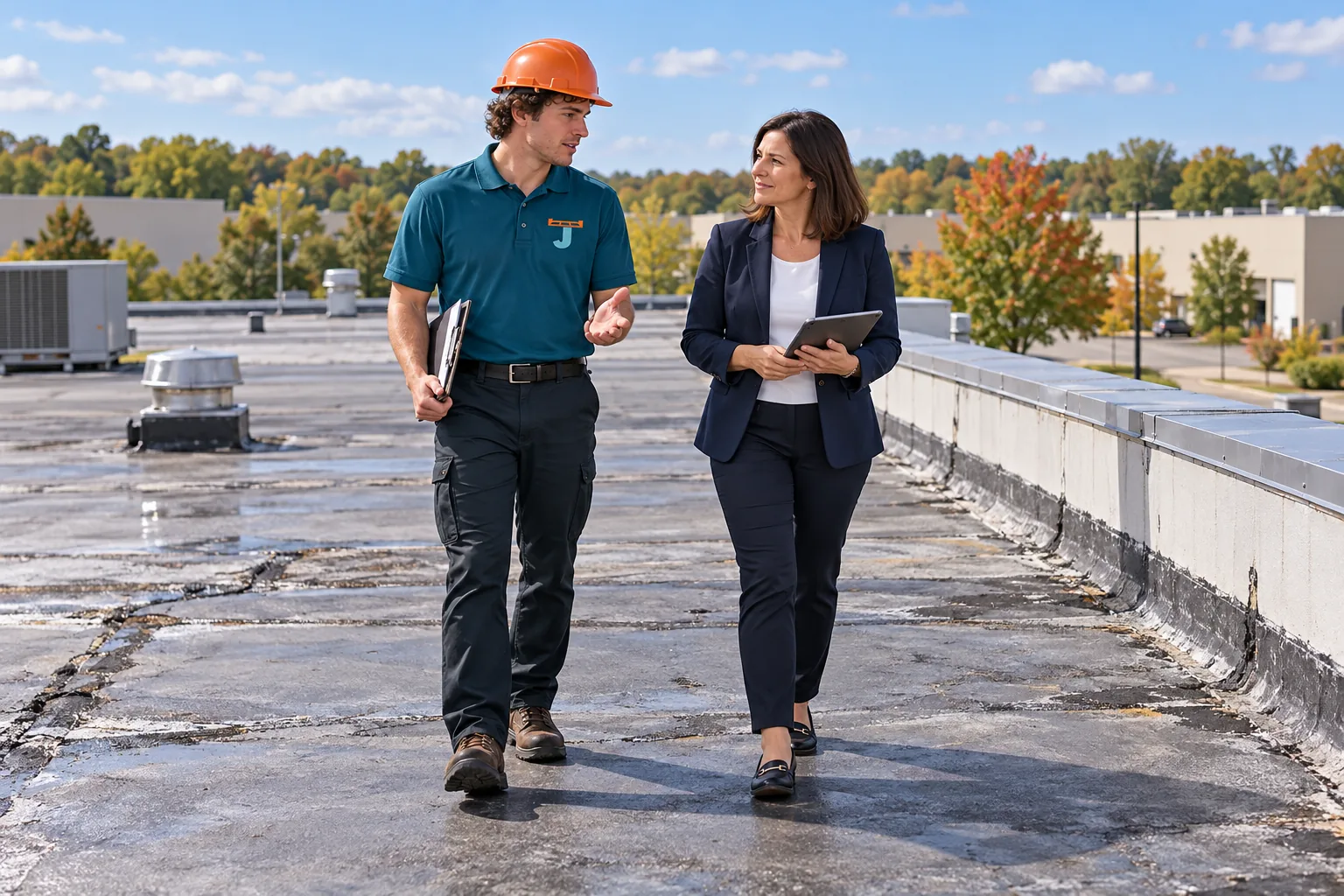
Commercial Roof Repair
Lap and boot repairs on EPDM roofs that still have dry insulation.
Commercial roof repair in Jeffersontown →
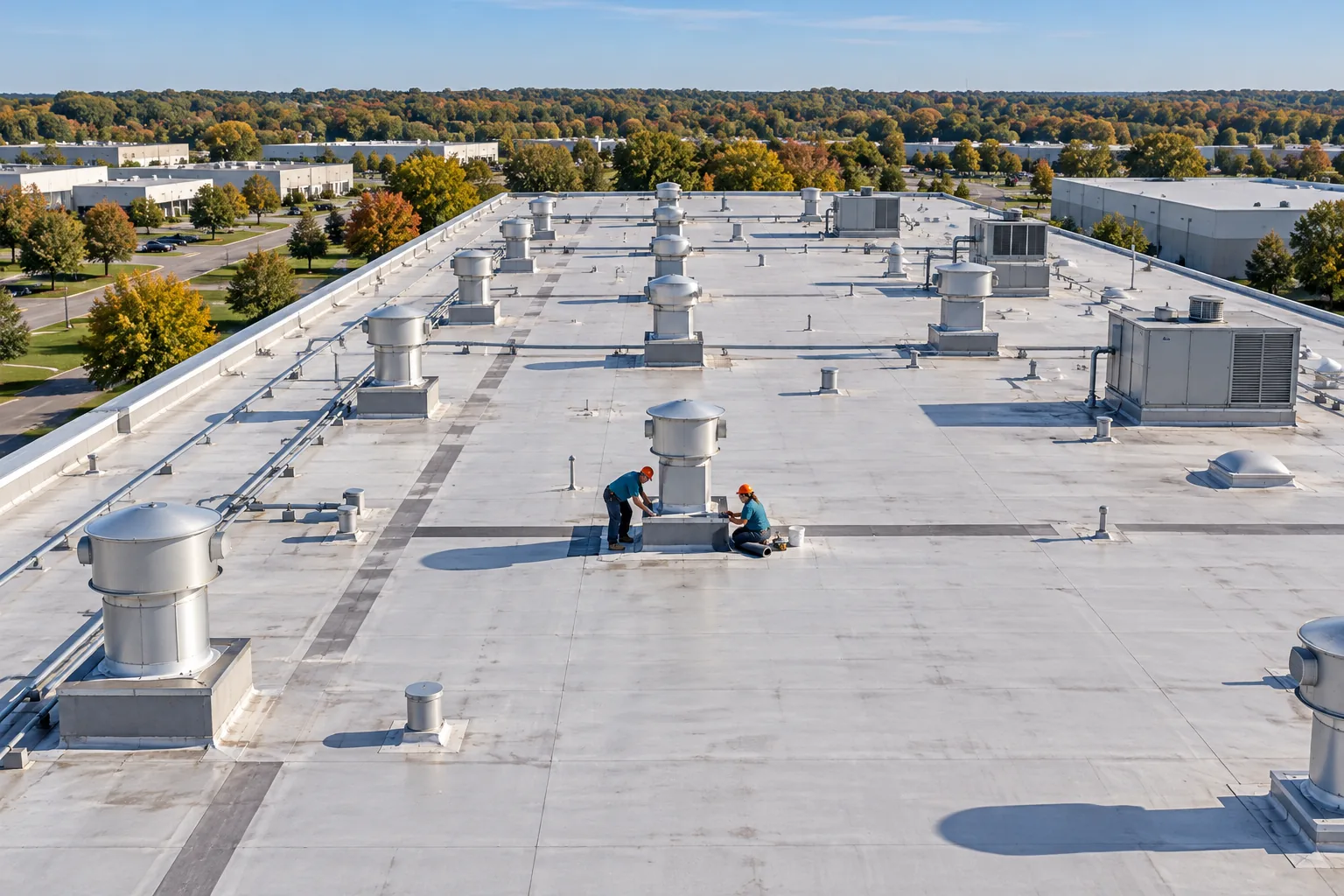
Industrial Roofing
Large plant roofs where wide EPDM sheets meet exhaust and process vents.
Industrial roofing in Jeffersontown →EPDM Questions for a Jeffersontown EPDM Roofing Contractor
Answers on seams, heat, insulation, and replacement for EPDM roofs here.
Most Asked
What is an EPDM roof, and where does it fit?
EPDM is a synthetic rubber membrane, black on most buildings, that covers low-slope roofs in large sheets with few seams. That makes EPDM rubber roof installation in Jeffersontown a common fit on broad, simple roofs over warehouses, additions, and older flat-roofed offices, and it stays flexible through cold snaps.
How are EPDM seam tape and primer details installed?
Installers clean and prime each seam, wait for the primer to flash off, then lay factory seam tape and roll it flat with a silicone hand roller across its full width. Seam ends and T-joints get cured cover patches, and corners get uncured flashing formed by hand.
Should I replace an EPDM roof with TPO or EPDM?
Either works on most low-slope roofs. Staying with EPDM makes tie-ins to other rubber sections easy and suits ballasted roofs. Switching to TPO brings welded seams and a white surface, but needs a transition detail at existing EPDM. Edge metal, drains, and curbs get rebuilt either way.
Does a black EPDM roof make sense with Kentucky summers?
On unconditioned storage, yes. Black EPDM absorbs more summer heat than white membranes, so air-conditioned offices and retail do better with white EPDM or TPO. The membrane handles the heat well; what the heat affects is the space under the deck and the units cooling it.
What insulation goes under an EPDM membrane?
Rigid boards, often polyiso, fastened through to the deck with screws and plates, usually with a cover board on top for foot traffic. Tapered boards go where water must move toward drains. The insulation thickness sets the roof height, which decides whether curbs and parapet caps need raising.
How do I spot an EPDM roof?
Look for a dull black surface, lap lines spaced far apart, and rubber pipe boots at each vent. Older rubber roofs sometimes also show river stone ballast over a loose sheet, or taped seams with small patches at their ends.
Can new EPDM tie into an existing rubber roof on an addition?
Yes. New EPDM joins existing rubber with primer and seam tape, so an addition or a replaced section ties in without a transition detail. The old sheet is cleaned back to sound rubber first, and the lap is rolled flat and patched at its ends like any field seam.
Work With a Jeffersontown EPDM Roofing Contractor
Tell us the roof's age and whether it is black rubber now. We will core it and lay out the EPDM or TPO option that fits.